
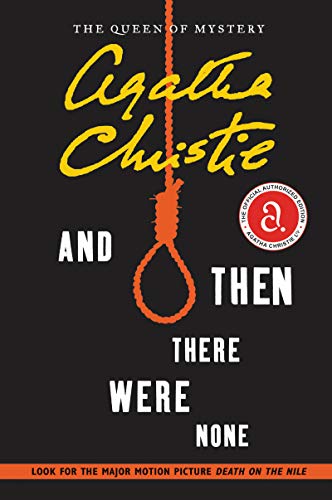
And Then There Were None
Agatha Christie
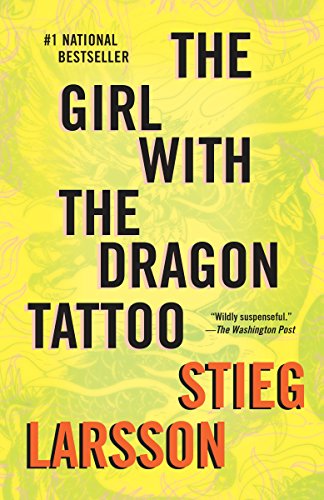
The Girl with the Dragon Tattoo
Stieg Larsson
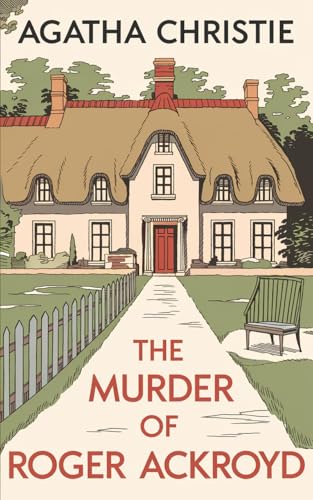
The Murder of Roger Ackroyd
Agatha Christie
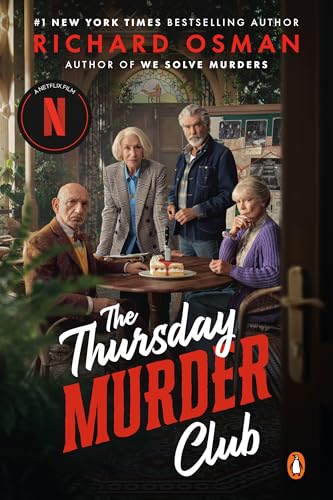
The Thursday Murder Club
Richard Osman

Where the Crawdads Sing
Delia Owens
Delia Owens
Where the Crawdads Sing
Delia Owens
Mystery
Literary mystery / courtroom
2018
7
6
A girl abandoned by her family and raised alone in the North Carolina marsh becomes the town's only suspect when a popular young man is found dead beneath a fire tower.
The community's outcast is tried for the death of its golden boy.
A coming-of-age nature novel braided with a small-town murder trial.
Kya Clark — self-taught, isolated by abandonment rather than choice, and a genuinely expert naturalist.
Barkley Cove's social judgement; Chase Andrews personally.
Character core
To be left alone in the marsh, keep her independence, and never be abandoned again.
To risk connection, and to reckon with the fact that isolation has not made her safe, only unwitnessed.
The marsh will never leave me. People always will, so people are the danger.
She cannot be protected by withdrawal — the town can reach her whether she engages or not — and survival requires acting rather than hiding.
A capital conviction, and the loss of the marsh that is both her home and her identity.
Structure
Third person limited on Kya, past tense, in two timelines — her life from 1952 onward and the 1969 investigation and trial — converging at the trial.
Dual timeline with a deliberate asymmetry: the growing-up strand is long, lyrical, and intimate; the investigative strand is short, clipped, and procedural. The convergence at the trial is where the reader's accumulated sympathy is set against the evidence, which is the whole design.
Chase Andrews's body is found at the base of the fire tower with no fingerprints and no footprints, and the town's attention turns immediately to the Marsh Girl.
Chase's pursuit of Kya turns coercive and then violent, which establishes both motive and the reader's sympathy in the same sequence.
Kya is arrested and jailed, cut off from the marsh entirely, and the town's prior contempt is admitted as though it were evidence.
The trial. The defence's case rests on an alibi and on the prosecution's inability to place her at the tower.
Acquittal, a long life, and — after her death — Tate finds the shell necklace and the poem, which confirm she killed him.
Story beats
| Beat | Where | How it lands |
|---|---|---|
Someone leaves and doesn't come back | Act I | The mother leaves, then each sibling, then the father — abandonment rendered as a sequence rather than an event. |
A crime scene cleaned by someone innocent | Investigation | The scene has been cleaned of prints and tracks, and the absence of evidence is treated as evidence. |
An early skill that pays off much later | Throughout | Kya's naturalist knowledge — tides, currents, timing — is established as character and functions in the ending. |
An alibi that holds up and shouldn't | Trial | The alibi holds and the prosecution cannot break it, which is the legal question and not the moral one. |
The truth told and not believed | Middle | Kya reports Chase's assault and is neither believed nor helped. |
A reveal that recontextualizes an earlier scene | Final pages | The necklace and the poem reframe the entire trial after the verdict is safely past. |
The victim was genuinely unpleasant | Throughout | The victim is genuinely unpleasant, which loads the reader's sympathy before the evidence arrives. |
Someone leaves and doesn't come back
The mother leaves, then each sibling, then the father — abandonment rendered as a sequence rather than an event.
A crime scene cleaned by someone innocent
The scene has been cleaned of prints and tracks, and the absence of evidence is treated as evidence.
An early skill that pays off much later
Kya's naturalist knowledge — tides, currents, timing — is established as character and functions in the ending.
An alibi that holds up and shouldn't
The alibi holds and the prosecution cannot break it, which is the legal question and not the moral one.
The truth told and not believed
Kya reports Chase's assault and is neither believed nor helped.
A reveal that recontextualizes an earlier scene
The necklace and the poem reframe the entire trial after the verdict is safely past.
The victim was genuinely unpleasant
The victim is genuinely unpleasant, which loads the reader's sympathy before the evidence arrives.
Tropes
The reader is positioned to believe in a wrongful prosecution, and the final pages withdraw that.
The trial supplies the third act's structure and forces the town to state its prejudice on the record.
The marsh is given more descriptive attention than any human character and functions as Kya's only stable relationship.
Childhood and investigation converge at the trial, with deliberately asymmetric prose registers.
Placed after the resolution, which changes its function from plot reversal to moral reversal.
Serial abandonment is the book's originating wound and the source of Kya's lie.
Craft notes
Owens spends the entire book making the reader want an acquittal and then, in the last three pages, tells them they were right about the verdict and wrong about the facts. The reveal works because it is placed after the legal question is closed, so it changes the reader's moral position rather than the plot. Consider putting your twist after the resolution rather than inside it.
Readers with legal or ecological knowledge have pushed back hard on specifics in this book. The lesson is not to avoid technical material but to accept that a novel which invites expert readers will get expert scrutiny — verify the parts your climax rests on.
Drop this structure into a project, set a daily word goal, and keep the streak. Free 14-day Pro trial, no credit card.