
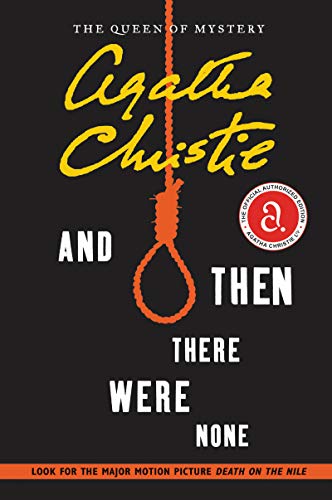
And Then There Were None
Agatha Christie
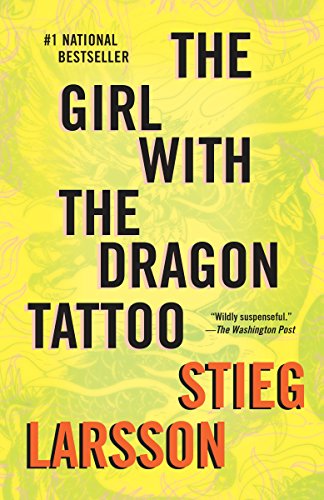
The Girl with the Dragon Tattoo
Stieg Larsson
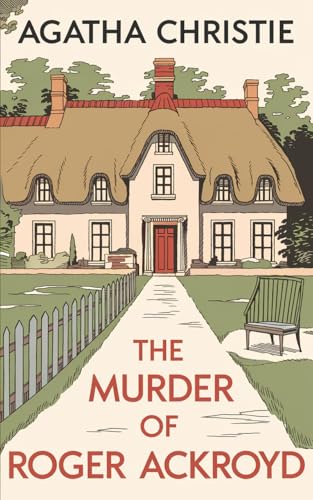
The Murder of Roger Ackroyd
Agatha Christie
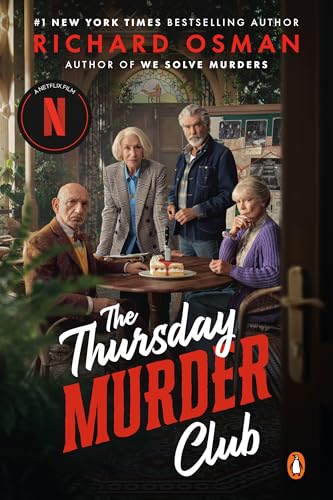
The Thursday Murder Club
Richard Osman

Where the Crawdads Sing
Delia Owens
Richard Osman
The Thursday Murder Club
Richard Osman
Mystery
Cozy mystery
2020
6
6
Four residents of a comfortable retirement village who meet weekly to review cold cases get a live one when the developer's business partner is found dead, and their combined lifetimes of expertise turn out to be considerable.
Retirees with unexpected skill sets investigate a murder on their own doorstep.
A traditional village mystery relocated to a retirement community, with the ensemble's mortality as the emotional undertow.
Elizabeth drives the investigation; Joyce narrates and is the reader's access point; Ron and Ibrahim supply the other two skill sets.
Rotates by design. The book keeps reassigning suspicion between the development's business interests and the residents' own histories.
Character core
To solve the murder, and — beneath it — to still be useful, consulted, and taken seriously.
To face what the village actually is: a well-appointed waiting room, where every friendship has a foreseeable end date.
Old age is a matter of managing decline politely and not making a fuss.
Competence does not expire. What the four of them have is not a hobby but a set of professional capabilities that the world stopped asking about.
A murderer at large among people with nowhere else to live, and the slower loss the book keeps in the corner of the frame.
Structure
Third person present tense for the main narrative, interleaved with Joyce's first-person diary entries. The two registers let Osman run plot and voice on separate tracks.
Alternating chapter forms — third-person scenes and Joyce's diary — which lets the book deliver exposition, characterisation, and comic relief without slowing the investigation. Two murders and a decades-old secret are braided so that solving one reframes the others.
Tony Curran, the developer's partner, is found dead, and the Club has a current case for the first time.
A second death changes the shape of the problem and rules out the theory the group has been building on.
The police close in on a conclusion the Club believes is wrong, and their unofficial standing means nobody is required to listen.
Elizabeth assembles the sequence, and the solution turns on a decades-old relationship rather than on the development money everyone has been following.
The case closes, the police relationship is formalised into something ongoing, and one of the book's quieter losses is allowed to land without being solved.
Story beats
| Beat | Where | How it lands |
|---|---|---|
The suspect's neighbor is unhelpfully honest | Throughout | Residents are unhelpfully honest, and their candour is more disruptive than any cover-up. |
A cold case that overlaps by one detail | Middle | An old unsolved matter from the Club's files overlaps the current case by a single detail. |
The second body that breaks the working theory | Midpoint | The second body invalidates the working theory and forces a restart. |
Someone paid to keep quiet, years ago | Late | A payment made decades ago explains the motive nobody had a reason to look for. |
The pet | Throughout | Small, ordinary losses accumulate alongside the murders and are given equal narrative weight. |
A colleague obstructing for a sympathetic reason | Middle | A police officer obstructs the Club for entirely reasonable professional reasons. |
The suspect's neighbor is unhelpfully honest
Residents are unhelpfully honest, and their candour is more disruptive than any cover-up.
A cold case that overlaps by one detail
An old unsolved matter from the Club's files overlaps the current case by a single detail.
The second body that breaks the working theory
The second body invalidates the working theory and forces a restart.
Someone paid to keep quiet, years ago
A payment made decades ago explains the motive nobody had a reason to look for.
The pet
Small, ordinary losses accumulate alongside the murders and are given equal narrative weight.
A colleague obstructing for a sympathetic reason
A police officer obstructs the Club for entirely reasonable professional reasons.
Tropes
Coopers Chase is a closed community with its own gossip infrastructure and hierarchy.
Four amateurs, each with a genuine professional background that the book releases slowly.
The Club's original purpose, which becomes the key to the live one.
The village and its residents receive as much attention as the crime.
The setting means every suspect and every victim is a neighbour.
The property development supplies motive for almost everyone, which is exactly its function.
Craft notes
Osman keeps a memory-care ward inside a comic novel and never uses it for a joke. The book's warmth is what makes its grief admissible — readers accept sadness from a book that has been kind to them. If you are writing comedy with a serious substrate, protect one thread absolutely from the tone of the rest.
Cozy mysteries often let the amateurs succeed by making the police incompetent. Here Chris and Donna are capable, and the Club's advantage is access and time rather than superior intellect, which keeps both sides credible.
Drop this structure into a project, set a daily word goal, and keep the streak. Free 14-day Pro trial, no credit card.