
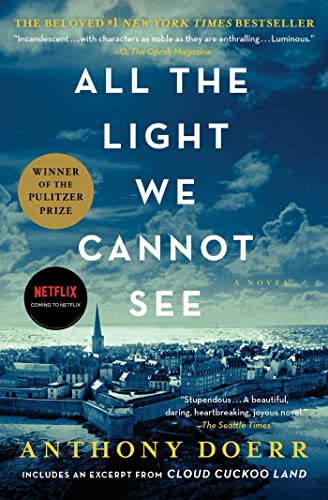
All the Light We Cannot See
Anthony Doerr

Lessons in Chemistry
Bonnie Garmus
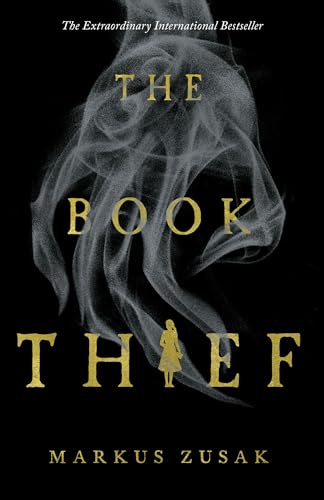
The Book Thief
Markus Zusak

The Help
Kathryn Stockett

The Nightingale
Kristin Hannah
Kristin Hannah
The Nightingale
Kristin Hannah
Historical
Historical fiction / World War II
2015
7
6
Two estranged sisters in occupied France take opposite paths — one endures the occupation in her village with a German officer billeted in her house, the other joins the resistance and leads downed Allied airmen across the Pyrenees.
Two sisters resist an occupation in incompatible ways, and each believes the other is doing it wrong.
A wartime family novel that argues survival and resistance are both forms of courage.
Vianne Mauriac and Isabelle Rossignol, given equal weight and opposed methods.
The occupation, personified in successive billeted officers, and the sisters' father's abandonment underneath everything.
Character core
Vianne wants her daughter alive and her husband home. Isabelle wants to matter, and to be forgiven by a father who has never wanted her.
Each needs to recognise the other's course as courage rather than as failure — Vianne's endurance and Isabelle's action are both costly and neither is safe.
Vianne: if I comply and stay quiet, my family will be left alone. Isabelle: if I do something big enough, my father will finally see me.
Compliance does not purchase safety — Vianne ends up hiding Jewish children at greater personal risk than any of Isabelle's crossings. And Isabelle's father does see her, in the way that costs him everything.
Sophie's life, the children Vianne hides, Isabelle's network, and — for both — capture, deportation, and Ravensbrück.
Structure
Third person limited, alternating between Vianne and Isabelle, past tense, with a 1995 frame in the first person that withholds which sister is narrating.
Dual protagonists with opposed strategies, plus a frame that conceals a single fact until the final pages. Hannah escalates both strands in parallel: Vianne's home is progressively invaded while Isabelle's routes become progressively more dangerous, so the reader cannot rest in either.
France falls, Antoine is conscripted and captured, and a German officer is billeted in Vianne's house.
Isabelle establishes the escape route over the Pyrenees and becomes the Nightingale, while Vianne is forced to hand over a list of names — the point where each sister's path becomes irreversible.
Isabelle is captured; the father takes her place and is executed; Vianne is alone in a house occupied by a far worse officer, with children hidden in the convent.
Both sisters' concealments hold — Vianne's children survive, Isabelle's airmen are out — at a cost paid in the camps.
Isabelle returns from Ravensbrück and dies. The 1995 frame reveals Vianne as the narrator, at a reunion for a resistance she never claimed credit for.
Story beats
| Beat | Where | How it lands |
|---|---|---|
A soldier billeted in the house | Throughout | Successive officers billeted in Vianne's house convert her home into occupied territory by degrees. |
Meeting someone from the country they're at war with | Middle | Vianne's relationship with Beck is decent, corrosive, and impossible to characterise safely. |
A mountain crossing that kills the pack animals | Isabelle's strand | The Pyrenees crossings are physical ordeals that kill people and are repeated for years. |
Papers demanded and not produced | Throughout | Forged papers and identity checks are the daily currency of both sisters' survival. |
Choosing between two people they owe | Middle | Vianne must choose between her own child and the children she is hiding, repeatedly. |
A child sent away to be raised elsewhere | Middle | Jewish children are placed with Vianne and in the convent under false names. |
A reunion that goes badly | Frame | The 1995 reunion is a return to a past the narrator has spent fifty years not discussing. |
A soldier billeted in the house
Successive officers billeted in Vianne's house convert her home into occupied territory by degrees.
Meeting someone from the country they're at war with
Vianne's relationship with Beck is decent, corrosive, and impossible to characterise safely.
A mountain crossing that kills the pack animals
The Pyrenees crossings are physical ordeals that kill people and are repeated for years.
Papers demanded and not produced
Forged papers and identity checks are the daily currency of both sisters' survival.
Choosing between two people they owe
Vianne must choose between her own child and the children she is hiding, repeatedly.
A child sent away to be raised elsewhere
Jewish children are placed with Vianne and in the convent under false names.
A reunion that goes badly
The 1995 reunion is a return to a past the narrator has spent fifty years not discussing.
Tropes
The book's core subject, and unusual in giving equal weight to the non-combatant version.
The 1995 frame conceals the narrator's identity, which is the structural payoff.
Vianne's strand is a full home-front novel — rationing, billeting, denunciation, and school lists.
The father's history and his final act reframe both daughters' motivations.
Isabelle's survival of Ravensbrück is temporary, and the book refuses to make it redemptive.
Resistance communication and forged documents are the practical machinery of the plot.
Craft notes
Hannah's frame conceals identity rather than event, so the reader spends the novel assuming the survivor is the heroic sister. The reveal reframes the book's argument: the one who stayed was the one who lived and the one who saved more people. If you use a frame narrator, consider withholding who rather than what.
Wartime novels frequently rank their characters' choices, endorsing the resistance fighter and pitying the collaborator or the survivor. This book's structural commitment is to refuse that ranking, and it is the reason the dual-protagonist design earns its length.
Drop this structure into a project, set a daily word goal, and keep the streak. Free 14-day Pro trial, no credit card.