
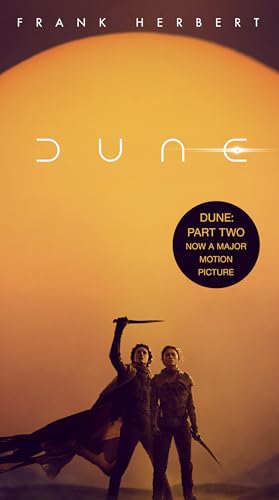
Dune
Frank Herbert

Ender's Game
Orson Scott Card

Neuromancer
William Gibson
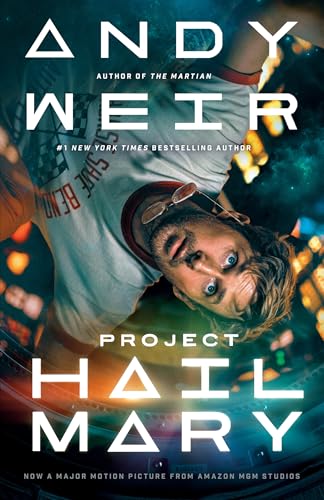
Project Hail Mary
Andy Weir

The Martian
Andy Weir
Andy Weir
The Martian
Andy Weir
Sci-Fi
Hard science fiction / survival
2011
7
6
Presumed dead and abandoned on Mars after a dust storm forces his crew's evacuation, a botanist and mechanical engineer has to survive four years on a habitat rated for thirty-one days with no way to tell anyone he is alive.
One man alone on a planet solves a chain of engineering problems, each solution creating the next problem.
Robinson Crusoe with peer-reviewable arithmetic and a comedian's log entries.
Mark Watney — competent, profane, and armoured with humour that the book quietly identifies as a coping mechanism.
Physics. There is no human villain, and NASA's institutional caution is the closest the book comes to opposition.
Character core
To not die, and then to reach the Ares 4 site.
Nothing internal in the conventional sense — Weir deliberately writes a protagonist without an arc, which is a choice with costs and benefits worth studying.
The book substitutes a running risk for a lie: that ingenuity will always be enough, which the Hab breach and the rover accident repeatedly test.
Delivered thematically rather than personally: the rescue happens because a species-wide instinct to retrieve a stranded person overrides cost-benefit analysis in every institution involved.
Starvation, decompression, and the specific loneliness of being the only human on a planet.
Structure
First person log entries from Watney, alternating with third person on Earth and aboard the Hermes. The log is a formal device that also solves the isolation problem: a solitary character has a legitimate reason to narrate.
A chain of problem-solution units. Weir's structure is close to mechanical: establish a constraint, solve it, have the solution generate a new failure. The Earth and Hermes sections exist to give the reader other people to care about and to convert Watney's private engineering into public stakes.
The storm, the antenna, the abort, and Watney waking up alone with a punctured suit and a biomonitor that told everyone he was dead.
Pathfinder. Watney establishes communication with Earth, which transforms the book from a survival story into a rescue operation and gives him an audience — and, immediately afterwards, costs him the ability to talk when he destroys the rover's connection.
The Hab airlock breach destroys the crop, the water, and the margin, resetting the calorie arithmetic to something that does not work.
The Rich Purnell manoeuvre, the crew's mutiny to execute it, and the intercept — with Watney puncturing his glove to close the last distance.
Recovery aboard Hermes, and a closing reflection on why a species spends billions on one person.
Story beats
| Beat | Where | How it lands |
|---|---|---|
Repairing something critical with the wrong materials | Throughout | Every repair uses the wrong materials, and the improvisation is documented in enough detail to be believed. |
The backup system was never tested | Middle | Equipment rated for thirty-one days is asked to run for years, and the failures come from fatigue rather than sabotage. |
A comms delay that makes real dialogue impossible | Middle | The Mars-Earth light delay makes real conversation impossible and turns dialogue into correspondence. |
Someone deletes the logs | Earth sections | NASA management withholds information from the Hermes crew, and the decision is defensible and wrong. |
Someone requests to stay behind | Climax | The crew votes to extend their own mission by nearly two years to retrieve one man. |
The plan works and solves nothing | Midpoint | Pathfinder works and immediately produces a worse problem than the one it solved. |
Losing something small and irreplaceable | Middle | The loss of the potato crop is rendered as a personal bereavement, which is the only place Watney's humour drops. |
Repairing something critical with the wrong materials
Every repair uses the wrong materials, and the improvisation is documented in enough detail to be believed.
The backup system was never tested
Equipment rated for thirty-one days is asked to run for years, and the failures come from fatigue rather than sabotage.
A comms delay that makes real dialogue impossible
The Mars-Earth light delay makes real conversation impossible and turns dialogue into correspondence.
Someone deletes the logs
NASA management withholds information from the Hermes crew, and the decision is defensible and wrong.
Someone requests to stay behind
The crew votes to extend their own mission by nearly two years to retrieve one man.
The plan works and solves nothing
Pathfinder works and immediately produces a worse problem than the one it solved.
Losing something small and irreplaceable
The loss of the potato crop is rendered as a personal bereavement, which is the only place Watney's humour drops.
Tropes
The apocalypse is personal and local — one man, one planet, and a fully functioning civilisation watching.
Watney farms Mars accidentally and at the smallest possible scale, in a Hab with human waste and Martian regolith.
The most extreme version available, and the book resolves it at the midpoint rather than the end.
The clock is caloric and the arithmetic is shown, so the reader can compute the deadline themselves.
The recovered artefact is Pathfinder — human, obsolete, and buried by our own abandonment.
There is no AI. Every intelligence in the book is human, which is unusual for the subgenre and central to its argument.
Craft notes
Weir shows the arithmetic. Calories per sol, litres of water, kilograms of hydrazine — the reader is given real numbers and can follow the logic, which makes each solution satisfying rather than convenient. Competence porn only works if the audience can audit the competence. Do not summarise the problem-solving; show enough of it to be checkable.
The book's most-copied element is the voice, and its least-copied is the discipline that every solution creates a proportionate new problem. Without that chain, a survival novel becomes a list of obstacles cleared rather than a system under strain.
Drop this structure into a project, set a daily word goal, and keep the streak. Free 14-day Pro trial, no credit card.