

A Game of Thrones
George R. R. Martin
Fourth Wing
Rebecca Yarros
Harry Potter and the Sorcerer's Stone
J.K. Rowling
Mistborn: The Final Empire
Brandon Sanderson
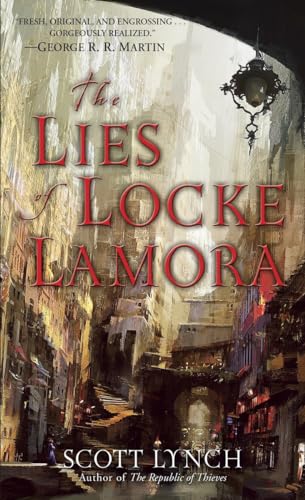
The Lies of Locke Lamora
Scott Lynch
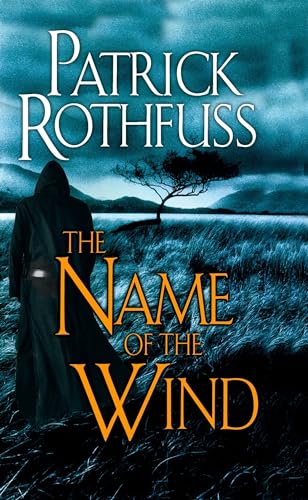
The Name of the Wind
Patrick Rothfuss
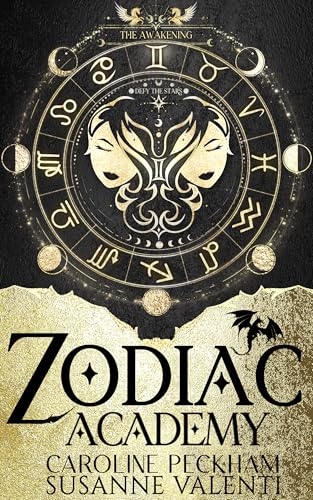
Zodiac Academy: The Awakening
Caroline Peckham, Susanne Valenti
Scott Lynch
The Lies of Locke Lamora
Scott Lynch
Fantasy
Fantasy heist / secondary-world crime
2006
6
6
A crew of confidence artists running an elaborate long con against the nobility of a canal city find themselves caught between the crime lord whose rules they have been quietly breaking and a masked outsider systematically murdering his captains.
Con artists at the top of their game meet someone playing a different, much crueller one.
A Renaissance-Venetian crime novel with heist mechanics and a body count that arrives without warning.
Locke Lamora — a brilliant improviser, a poor fighter, and vain enough about the former to under-prepare for the latter.
The Grey King and the Bondsmage Falconer; behind them, the Secret Peace that Locke has been violating for years.
Character core
To finish the Salvara con, keep the Gentlemen Bastards' existence hidden from Capa Barsavi, and be the best thief in Camorr.
To accept that his crew are people rather than instruments of his cleverness, and that a plan is not a substitute for the ability to survive a plan failing.
There is no situation I cannot talk my way out of. Preparation is for people without imagination.
Improvisation has a hard limit, and it is reached the moment someone is willing to simply kill you. His talent did not protect the people it was supposed to protect.
The crew's lives, the con's proceeds, and Camorr's entire criminal order — which the Grey King is dismantling from the top.
Structure
Third person limited on Locke, past tense, alternating with interludes from the crew's childhood under Father Chains. The interludes teach the reader the rules that the present-day chapters then break.
Dual timeline by design. Every flashback interlude installs a skill, a rule, or a relationship that the present-day plot immediately tests, so backstory is never inert. Lynch also runs two plots at once — the Salvara con and the Grey King's campaign — and collides them, so the crew's competence at one becomes their blindness to the other.
The Grey King begins killing Barsavi's garristas, and Locke is conscripted into impersonating him.
Locke's two problems fuse: the con he is running and the war he has been dragged into cannot be managed separately, and the Bondsmage makes clear that his usual tools do not apply.
Calo, Galdo, and Bug are murdered. Locke, beaten and left for dead in a barrel of horse urine, has lost the crew the whole book has been about.
Locke, with Jean, goes after the Grey King with no plan, no leverage, and nothing resembling his usual advantage — which is the point.
Revenge is taken, the money is gone, and the survivors leave a city that has cost them almost everything.
Story beats
| Beat | Where | How it lands |
|---|---|---|
The rules bent once, then bent again | Throughout | The Gentlemen Bastards have been breaking the Secret Peace by degrees for years, and the accumulated violation is what exposes them. |
The first real loss — small, not the big one | Middle | Deaths in Barsavi's organisation escalate before they touch the crew, teaching the reader what is coming. |
Someone leaves and doesn't come back | Act III | Calo, Galdo and Bug do not come back, and the crew's chemistry is permanently gone. |
A favor called in at the worst possible time | Throughout | Chains's old obligations and Barsavi's debts drive the plot Locke thinks he is directing. |
A duel of etiquette instead of swords | Con scenes | The Salvara con is conducted entirely through manners, credentials, and social confidence. |
A door closed behind them | Resolution | Camorr is closed to them; the ending removes the setting the whole book was built on. |
The rules bent once, then bent again
The Gentlemen Bastards have been breaking the Secret Peace by degrees for years, and the accumulated violation is what exposes them.
The first real loss — small, not the big one
Deaths in Barsavi's organisation escalate before they touch the crew, teaching the reader what is coming.
Someone leaves and doesn't come back
Calo, Galdo and Bug do not come back, and the crew's chemistry is permanently gone.
A favor called in at the worst possible time
Chains's old obligations and Barsavi's debts drive the plot Locke thinks he is directing.
A duel of etiquette instead of swords
The Salvara con is conducted entirely through manners, credentials, and social confidence.
A door closed behind them
Camorr is closed to them; the ending removes the setting the whole book was built on.
Tropes
The Salvara con is shown in full working detail, including the parts that depend on the mark's own greed.
Locke's profession supplies the book's procedure, vocabulary, and its moral costs.
And then dismantled — the crew's destruction is the book's central injury.
Childhood interludes are structurally functional, installing every rule the present-day plot violates.
Two heists run concurrently, and the second is invisible to Locke until it is too late.
Father Chains teaches in the past tense only, and his absence in the present is deliberate.
Craft notes
Lynch spends three hundred pages establishing that Locke wins by talking, then introduces an antagonist immune to talking. The most reliable way to escalate is not a bigger threat but a threat that is specifically immune to your protagonist's method. Identify the move your hero always makes and build the villain who ignores it.
The interludes work because each one is load-bearing — a rule of the Secret Peace, a lesson from Chains, a piece of the con's technique. Flashbacks that only supply emotional colour will stall a heist novel dead, because the reader is impatient to return to the plan.
Drop this structure into a project, set a daily word goal, and keep the streak. Free 14-day Pro trial, no credit card.