
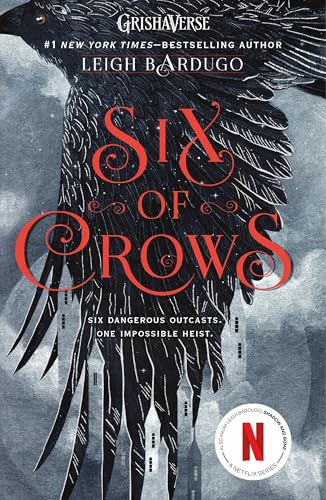
Six of Crows
Leigh Bardugo

Speak
Laurie Halse Anderson

The Fault in Our Stars
John Green
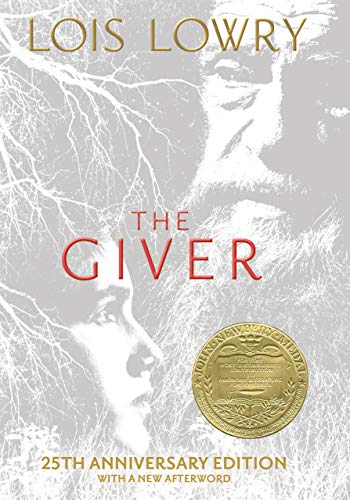
The Giver
Lois Lowry

The Hunger Games
Suzanne Collins
Suzanne Collins
The Hunger Games
Suzanne Collins
YA
Dystopian YA
2008
7
6
When her twelve-year-old sister's name is drawn for a televised fight to the death between children, a girl from the poorest district volunteers in her place and discovers that surviving the arena requires performing a romance for an audience that decides who lives.
A girl volunteers for her sister's place in a state-run death game and becomes a propaganda problem.
A survival narrative in which the real contest is broadcast appeal rather than combat.
Katniss Everdeen — competent, guarded, and politically illiterate at the outset.
President Snow and the Capitol; more immediately, the Gamemakers, who can rewrite the arena at will.
Character core
To survive, get home, and keep Prim fed.
To understand that neutrality is not available — the Capitol's cruelty implicates everyone who plays along, and her survival will be read as a political act whatever she intends.
If I keep my head down, hunt, and provide for my family, the Capitol's cruelty is something that happens around me rather than to me.
The arena is a broadcast and every gesture is a statement. Refusing to kill Peeta at the end is not a private choice but a public defiance, and the Capitol receives it as one.
Prim's death, her own death on live television, and the district's continued subjection — plus, after the berries, the Capitol's retaliation.
Structure
First person present tense on Katniss, which keeps the reader inside her tactical calculation and her inability to read her own feelings.
Three-part structure — reaping and journey, training and Capitol, arena — with the sponsorship mechanic converting audience approval into survival resources. Collins's key design decision is that the romance is a strategy Katniss is executing and cannot tell whether Peeta is, which makes the love plot and the survival plot the same plot.
Prim's name is drawn at the reaping and Katniss volunteers.
The tracker jacker sequence and Rue. Katniss forms an alliance she does not need, which reframes the Games from survival to something she can be morally injured by.
Rue dies. Katniss covers her in flowers — an act of mourning as broadcast defiance — and District 11 responds, which puts her in danger from a direction she had not considered.
The rule reversal. With only Katniss and Peeta left, the Gamemakers revoke the two-victor announcement, and Katniss produces the nightlock berries.
Both survive. The Capitol frames the berries as lovesick desperation because the alternative is admitting it was defiance, and Katniss learns on the train home that she is now a target.
Story beats
| Beat | Where | How it lands |
|---|---|---|
An early skill that pays off much later | Act I to arena | Foraging, snares, and archery are established at home as survival necessity and cashed in the arena. |
Choosing between two people they owe | Throughout | Katniss is repeatedly forced to choose between Peeta, Rue, and her own survival. |
Discovering the ranking system is rigged | Throughout | The Games' rules are altered mid-event whenever the narrative requires it, and everyone knows it. |
A celebration held under false pretenses | Capitol | The tribute parade and interviews are a celebration of children about to be killed. |
The first real loss — small, not the big one | Middle | Rue's death is the loss that teaches the reader what this series will actually do. |
An offer they should refuse and don't | Act II | Katniss accepts the star-crossed-lovers angle from Haymitch knowing it is a fabrication. |
A public punishment attended as entertainment | Throughout | The Games are a public punishment attended as national entertainment, which is the book's actual subject. |
An early skill that pays off much later
Foraging, snares, and archery are established at home as survival necessity and cashed in the arena.
Choosing between two people they owe
Katniss is repeatedly forced to choose between Peeta, Rue, and her own survival.
Discovering the ranking system is rigged
The Games' rules are altered mid-event whenever the narrative requires it, and everyone knows it.
A celebration held under false pretenses
The tribute parade and interviews are a celebration of children about to be killed.
The first real loss — small, not the big one
Rue's death is the loss that teaches the reader what this series will actually do.
An offer they should refuse and don't
Katniss accepts the star-crossed-lovers angle from Haymitch knowing it is a fabrication.
A public punishment attended as entertainment
The Games are a public punishment attended as national entertainment, which is the book's actual subject.
Tropes
The reaping is the genre's most-copied scene and the one with the clearest economic logic behind it.
Twenty-three children die, and the book does not spare the youngest.
The triangle is largely a media construct Katniss is required to maintain, which is a genuinely novel handling.
The performance is directed by a handler, watched by sponsors, and only one participant knows it is fake.
A dead father and a mother incapacitated by grief make Katniss the household's provider at eleven.
Begun accidentally, with the berries, and recognised as rebellion by the state before it is by Katniss.
Craft notes
Collins makes the audience a mechanic. Sponsors send medicine based on how the tributes are playing, so every emotional beat has a resource consequence and every sincere moment is compromised by strategy. If you want a romance the reader cannot settle, give one character a material reason to perform it.
Dystopian YA imitators keep the selection ceremony and drop the economics. District 12's starvation, the tesserae system that puts poor children's names in more often, and the sponsorship market are all load-bearing — without them the ritual is arbitrary and the reader starts asking why nobody rebels.
Drop this structure into a project, set a daily word goal, and keep the streak. Free 14-day Pro trial, no credit card.