

Dracula
Bram Stoker

Frankenstein
Mary Shelley

Mexican Gothic
Silvia Moreno-Garcia
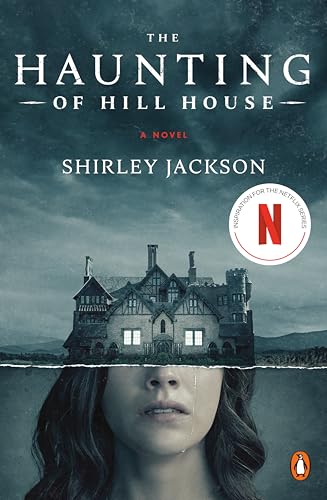
The Haunting of Hill House
Shirley Jackson
The Shining
Stephen King
Shirley Jackson
The Haunting of Hill House
Shirley Jackson
Horror
Psychological haunting
1959
7
6
A researcher assembles three companions at a house with a bad history to document psychic phenomena, and one of them — a lonely woman who has just escaped a lifetime of caring for her mother — begins to be wanted by the house.
Four people spend a summer in a haunted house, and it selects one of them.
A haunted-house novel in which the haunting may be entirely a description of loneliness, and the book refuses to say.
Eleanor Vance — thirty-two, unmoored, and desperate to belong to something after eleven years nursing her mother.
Hill House, and the group's slow social exclusion of Eleanor, which are difficult to distinguish and meant to be.
Character core
To be wanted. To have somewhere she is expected and a group she is part of.
To recognise that she is constructing the belonging she thinks she is receiving, and that the only place offering her a permanent home is a house.
Journeys end in lovers meeting. Something is finally about to be mine.
Withheld. The final line — the last thought before the tree — is Jackson's cruellest stroke, because it grants Eleanor a moment of clarity with no time to use it.
Eleanor's life, and the more ordinary horror of being sent back to her sister's spare room.
Structure
Third person limited on Eleanor, so close that her deterioration is invisible from inside it. The reader's only outside information comes from what the other characters say to her.
A closed cast in a closed setting across a short summer. Jackson's technique is architectural: Hill House's angles are wrong by small degrees, doors close themselves, and nothing is ever quite framed as impossible. The book's escalation is Eleanor's increasing willingness to be included — the phenomena barely intensify at all.
Eleanor steals her sister's car and drives to Hill House, the first free decision of her adult life.
The writing on the wall — HELP ELEANOR COME HOME — which makes her the group's subject rather than a member of it, and which Theodora suspects she wrote herself.
The others agree that Eleanor must leave, and the belonging she has built her whole self around is withdrawn by the people she believed had given it.
Eleanor's night walk through the house, up the library's iron staircase, entirely at ease for the first time.
Driven out, Eleanor turns the car into the tree at the bend in the drive. The house continues, unchanged, and Jackson's closing paragraph repeats the opening one almost exactly.
Story beats
| Beat | Where | How it lands |
|---|---|---|
Coming home and home is subtly wrong | Throughout | Hill House's proportions are wrong by degrees rather than obviously, so the wrongness accumulates below the threshold of argument. |
The group turns on the most frightened member | Late | The group turns on Eleanor, its most frightened member, in the gentlest possible way. |
A child's drawing | Midpoint | The writing on the wall is childish, personal, and unattributable. |
A friend acting normally, one detail off | Middle | Theodora behaves normally with a single note of cruelty, and Eleanor cannot tell whether she imagined it. |
Clearing out a parent's house | Backstory | Eleven years nursing a mother, ending in a death Eleanor may have caused by sleeping through a knock. |
Waking up somewhere else | Late | Eleanor moves through the house at night with no memory of deciding to. |
A reunion that goes badly | Act I | Eleanor's stop at her sister's house establishes exactly what she is running from. |
Coming home and home is subtly wrong
Hill House's proportions are wrong by degrees rather than obviously, so the wrongness accumulates below the threshold of argument.
The group turns on the most frightened member
The group turns on Eleanor, its most frightened member, in the gentlest possible way.
A child's drawing
The writing on the wall is childish, personal, and unattributable.
A friend acting normally, one detail off
Theodora behaves normally with a single note of cruelty, and Eleanor cannot tell whether she imagined it.
Clearing out a parent's house
Eleven years nursing a mother, ending in a death Eleanor may have caused by sleeping through a knock.
Waking up somewhere else
Eleanor moves through the house at night with no memory of deciding to.
A reunion that goes badly
Eleanor's stop at her sister's house establishes exactly what she is running from.
Tropes
The house is a personality and possibly a projection, and Jackson refuses to distinguish them.
Rendered from inside, with no external vantage available to the reader.
Eleanor does not survive, and the reader is left holding the only account there is.
Nothing is ever shown. The phenomena are pounding, cold spots, and handwriting.
The nursery's cold spot and the library's staircase are the house's two withheld spaces.
Eleanor's mother is unmourned and unresolved, and the house offers a substitute.
Craft notes
Jackson never lets the reader stand outside Eleanor. Because the point of view is airtight, the question of whether the house is haunted or Eleanor is disintegrating cannot be answered from inside the text — and the ambiguity is a consequence of the technique rather than a decision the author announces. If you want genuine ambiguity, achieve it structurally, not by withholding.
Copies of this book add proof — an object that moves in front of witnesses, a photograph, a corroborating account. Jackson gives the reader nothing that Eleanor did not perceive, which is why the ambiguity survives a hundred rereadings.
Drop this structure into a project, set a daily word goal, and keep the streak. Free 14-day Pro trial, no credit card.