

Beach Read
Emily Henry

It Ends with Us
Colleen Hoover

Pride and Prejudice
Jane Austen
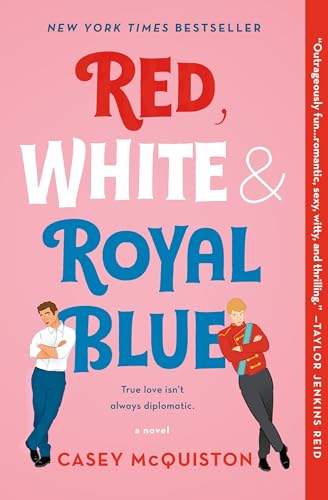
Red, White & Royal Blue
Casey McQuiston
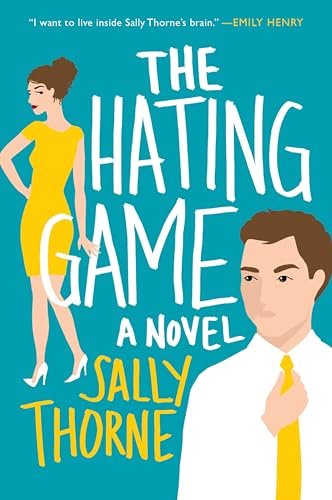
The Hating Game
Sally Thorne
Sally Thorne
The Hating Game
Sally Thorne
Romance
Contemporary romantic comedy
2016
7
6
Two executive assistants at a merged publishing house, who share an office and a catalogue of mutual antagonism games, are told they are competing for the same promotion.
Office nemeses discover that only one of them can be promoted, and that the antagonism was never what she thought it was.
A workplace enemies-to-lovers with a single-set structure and a first-person narrator who is wrong about the central fact.
Lucy Hutton — small, cheerful, conflict-averse in every context except this one, and considerably more competitive than she admits.
Joshua Templeman as Lucy perceives him; structurally, Lucy's own conviction that she is disliked.
Character core
The Chief Operating Officer position, and to beat Joshua for it.
To stop reading unfamiliarity as hostility, and to risk being the one who says something first.
He hates me. Everything he does is contempt, and the games are how I survive being disliked all day.
Josh has been in love with her since her first day, and every behaviour she read as antagonism was a man with no social vocabulary trying to be near her.
The promotion, the working relationship, and — because they share an office — the impossibility of a clean retreat if it goes wrong.
Structure
First person present tense on Lucy, which keeps the reader locked inside her misreading of Joshua for most of the book.
Almost entirely confined to one office and a handful of rooms. Thorne uses the enforced proximity of shared desks facing each other as the engine — the pair cannot avoid each other for a working day, so escalation is guaranteed without any plot contrivance. The promotion supplies the deadline.
The COO position is announced, and both of them are shortlisted.
The elevator and the kiss. The antagonism's actual content is exposed, and neither can go back to the game.
Lucy retreats into her assumption that she has been humiliated, and misreads a situation involving Josh's family in the worst available way.
Lucy tells him first, and withdraws from the competition on her own terms rather than his.
The promotion resolves in a way that requires each of them to have been honest about what they actually wanted from the job.
Story beats
| Beat | Where | How it lands |
|---|---|---|
A deadline that forces them to work together | Throughout | The promotion process forces them into a project neither can decline. |
Caring for the other while they're sick | Middle | Josh cares for Lucy while she is ill, and competence at tenderness is what breaks her model of him. |
Meeting the family | Late | Meeting Josh's family explains his defences without a word of exposition. |
A small gift that proves someone was paying attention | Throughout | The shirt colours, the notebook, the exact remembered details — small evidence of sustained attention, hidden in plain sight. |
The interrupted almost-kiss | Middle | Interruptions convert a single scene's charge into several chapters of it. |
One is excellent at something the other underestimated | Middle | Each turns out to be excellent at something the other had written off. |
Being seen at their least composed | Middle | Lucy is seen at her least composed, and Josh's reaction is the book's turning point. |
A deadline that forces them to work together
The promotion process forces them into a project neither can decline.
Caring for the other while they're sick
Josh cares for Lucy while she is ill, and competence at tenderness is what breaks her model of him.
Meeting the family
Meeting Josh's family explains his defences without a word of exposition.
A small gift that proves someone was paying attention
The shirt colours, the notebook, the exact remembered details — small evidence of sustained attention, hidden in plain sight.
The interrupted almost-kiss
Interruptions convert a single scene's charge into several chapters of it.
One is excellent at something the other underestimated
Each turns out to be excellent at something the other had written off.
Being seen at their least composed
Lucy is seen at her least composed, and Josh's reaction is the book's turning point.
Tropes
The enmity is unilateral and imagined; the reveal is that there was never a rivalry, only a misreading.
The office is a functioning institution with politics, HR risk, and a merger's cultural fault line.
The promotion is a genuine zero-sum contest and is not resolved by both of them winning.
Facing desks in a shared office is a more sustainable proximity device than any snowstorm.
With the useful complication that Lucy's sunshine is a professional strategy she resents needing.
The illness sequence is where Lucy's interpretation of Josh becomes impossible to maintain.
Craft notes
Thorne runs the entire book on a single false premise held by the narrator, and every scene is consistent under both readings. On a reread, Josh's behaviour is transparently that of a man in love — the staring, the notebook, the shirt colours. If you are writing a first-person misreading, the discipline is that the other character's actions must never be adjusted to fit the wrong interpretation.
Office romances usually treat the workplace as scenery. Here the shared office, the HR implications, the merger's cultural war between two publishing houses, and the specific mechanics of the promotion all constrain what the characters can do, which is what makes the small transgressions land.
Drop this structure into a project, set a daily word goal, and keep the streak. Free 14-day Pro trial, no credit card.