
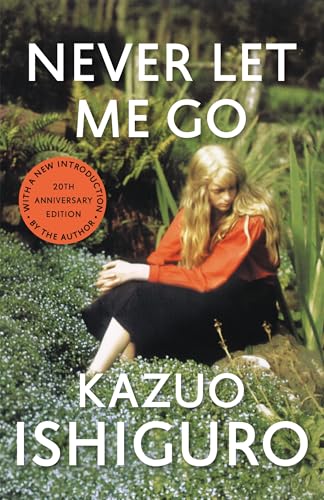
Never Let Me Go
Kazuo Ishiguro
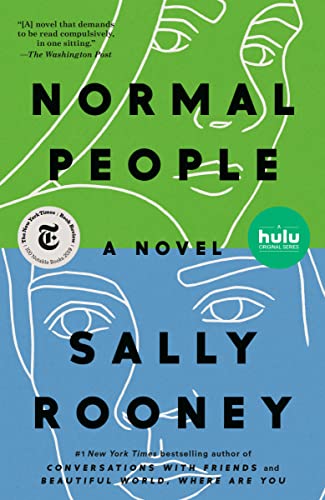
Normal People
Sally Rooney
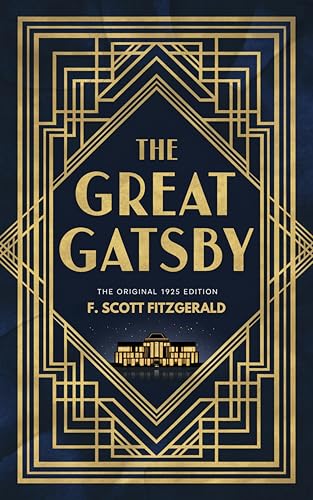
The Great Gatsby
F. Scott Fitzgerald
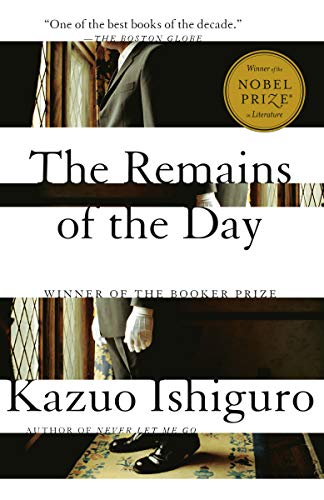
The Remains of the Day
Kazuo Ishiguro
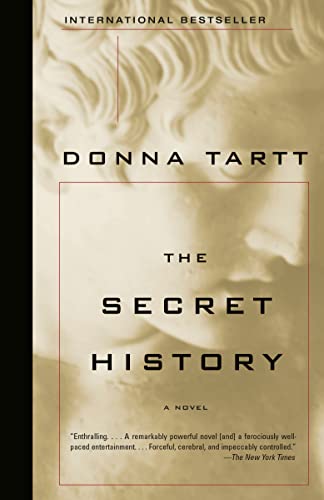
The Secret History
Donna Tartt
F. Scott Fitzgerald
The Great Gatsby
F. Scott Fitzgerald
Literary
American literary modernism
1925
7
6
A Midwestern bond salesman rents a cottage next door to a mysterious millionaire who throws enormous parties for people he does not know, and discovers the whole apparatus was built to attract the attention of one married woman across the bay.
A self-made man spends five years constructing a life designed to retrieve a woman he lost.
A short novel about class and self-invention, narrated by a man who claims not to judge and does nothing else.
Jay Gatsby as subject; Nick Carraway as narrator and the character who actually changes.
Tom Buchanan personally; the permanence of inherited class more broadly.
Character core
Gatsby wants Daisy, and specifically wants her to say she never loved Tom — the past revised rather than replaced.
To accept that the past is not retrievable and that Daisy is a person rather than a destination. He never does.
Of course you can repeat the past. Money and will can restore a moment that was interrupted.
Delivered to Nick rather than to Gatsby: the enchantment was always in the reaching, and the green light stopped meaning anything the moment it became a light on a dock.
Gatsby's entire constructed life; and, more quietly, whether Nick can continue to withhold judgement from people who cause deaths and go to lunch.
Structure
First person by Nick Carraway, retrospective, with a narrator whose reliability is compromised by admiration rather than by dishonesty.
Nine chapters, tightly symmetrical: the Buchanan dinner in chapter one is answered by the Plaza Hotel confrontation in chapter seven, and the two funerals — Myrtle's and Gatsby's — mirror each other. Fitzgerald withholds Gatsby's origin until after the reader has decided about him, which is the book's chief structural manoeuvre.
Nick is invited to a Gatsby party and learns his neighbour has been watching a green light across the water for five years.
Gatsby and Daisy are reunited at Nick's cottage — the goal is achieved at the exact centre, so the second half is entirely about the goal proving insufficient.
The Plaza Hotel. Tom exposes Gatsby's bootlegging, Daisy refuses to say she never loved her husband, and the dream fails in a hot room in front of witnesses.
Myrtle is killed by Daisy driving Gatsby's car; Tom directs George Wilson to Gatsby; Wilson shoots him in the swimming pool.
Almost nobody comes to the funeral. The Buchanans have left no forwarding address, and Nick returns west having lost his tolerance for them.
Story beats
| Beat | Where | How it lands |
|---|---|---|
A celebration held under false pretenses | Act I | The parties are enormous, joyful, and staged for an audience of one who never attends. |
A reunion that goes badly | Midpoint | The reunion at Nick's is awkward, rain-soaked, and immediately shows the gap five years made. |
The plan works and solves nothing | Midpoint | Gatsby gets Daisy back and the achievement solves none of what he actually wanted. |
Watching someone else get the thing you wanted | Throughout | Gatsby watches Tom hold, carelessly, everything he has spent his life assembling. |
Rescuing the wrong person | Climax | Gatsby takes the blame for a death he did not cause, and is killed for the wrong crime by the wrong man. |
The funeral where nobody cries | Resolution | The funeral is attended by Nick, Gatsby's father, and Owl Eyes — the emptiest room in American fiction. |
Discovering they were never the target | Late | Gatsby's own history — Gatz, Dan Cody, the shirts — arrives after the reader has already decided about him. |
A celebration held under false pretenses
The parties are enormous, joyful, and staged for an audience of one who never attends.
A reunion that goes badly
The reunion at Nick's is awkward, rain-soaked, and immediately shows the gap five years made.
The plan works and solves nothing
Gatsby gets Daisy back and the achievement solves none of what he actually wanted.
Watching someone else get the thing you wanted
Gatsby watches Tom hold, carelessly, everything he has spent his life assembling.
Rescuing the wrong person
Gatsby takes the blame for a death he did not cause, and is killed for the wrong crime by the wrong man.
The funeral where nobody cries
The funeral is attended by Nick, Gatsby's father, and Owl Eyes — the emptiest room in American fiction.
Discovering they were never the target
Gatsby's own history — Gatz, Dan Cody, the shirts — arrives after the reader has already decided about him.
Tropes
West Egg and East Egg are a two-page thesis on the difference between money and class.
Nick narrates from a distance, in a voice that has been rehearsing this account.
The book's argument is that a second chance at the same moment is not available at any price.
Gatsby completes the ascent financially and is refused socially, which is the book's engine.
The valley of ashes and Eckleburg's billboard function as a moral geography.
The Buchanan marriage is corrupt, mutually understood, and completely durable.
Craft notes
Fitzgerald puts the reunion — the thing the plot is engineered to produce — at the midpoint rather than the end. Everything after it is diminishment. If your protagonist's stated goal is achievable, achieve it early and spend the second half on what it does not fix.
The narrator's opening claim to reserve judgement is routinely read as a description rather than a symptom. Nick is a snob and a participant, and books that copy the observant-outsider narrator without giving him a stake produce a camera instead of a character.
Drop this structure into a project, set a daily word goal, and keep the streak. Free 14-day Pro trial, no credit card.