

A Time to Kill
John Grisham

Gone Girl
Gillian Flynn

My Husband's Wife
Alice Feeney

The Da Vinci Code
Dan Brown
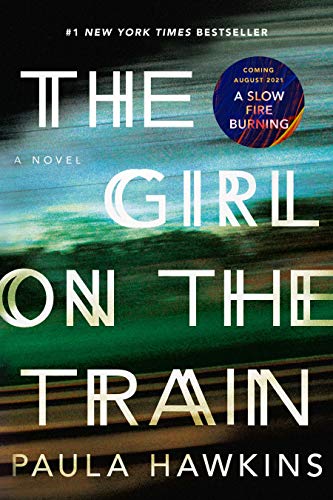
The Girl on the Train
Paula Hawkins
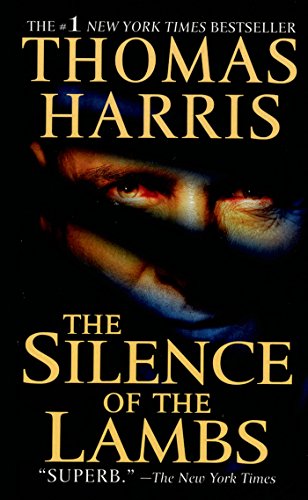
The Silence of the Lambs
Thomas Harris
Dan Brown
The Da Vinci Code
Dan Brown
Thriller
Conspiracy thriller
2003
6
6
Summoned to the Louvre after a curator is murdered, an American symbologist finds his own name in the dying man's message and must decode a chain of riddles across Paris and London while the police and a fanatic pursue him.
A murdered curator leaves a puzzle trail that leads to a secret the Church has killed to suppress.
A treasure hunt structured as a series of locked boxes, run at a flat sprint for four hundred pages.
Robert Langdon — expert, decent, and almost entirely static. He is a lens, not an arc.
Silas and Aringarosa in the foreground; Teabing, revealed late, as the actual architect.
Character core
Clear his name, solve Saunière's message, and stay ahead of Fache and Silas.
Structurally, Langdon has no need — the arc belongs to Sophie, who must decide whether to reclaim a family and a lineage she rejected.
Sophie's lie: my grandfather betrayed my trust, and the family I walked away from has nothing for me.
What she witnessed was a rite, not a betrayal, and the inheritance she refused is both a bloodline and a responsibility.
Imprisonment, Sophie's life, and the suppression or exposure of the Grail's true nature.
Structure
Third person, rotating among Langdon, Sophie, Fache, Silas and Teabing, present-tense in effect, with very short chapters ending on cliffhangers.
The most-copied commercial structure of the 2000s: 105 chapters averaging four pages, each ending on a reversal or a question, with viewpoint switching at the moment of maximum suspension. The plot is a linked list — each puzzle's solution is the next puzzle's location — which guarantees forward motion at the cost of any subplot.
Saunière is shot in the Louvre and arranges his own body and a coded message that names Langdon.
The cryptex and the flight to Teabing's estate. The chase turns from evading the police into a race for the Grail, with a new set of players.
Teabing is revealed as the Teacher, the group is taken at gunpoint, and every ally in the second half turns out to have been a participant.
The final cryptex is opened, and the answer redirects the search away from an object entirely.
Rosslyn, Sophie's surviving family, and Langdon's realisation about the Louvre pyramid — a resolution that is informational rather than dramatic.
Story beats
| Beat | Where | How it lands |
|---|---|---|
A message that arrives too late to matter | Act I | Saunière's final message is a communication he had no time to complete properly, which is why it must be decoded. |
An ally's private agenda surfaces | Act III | Teabing's private agenda surfaces after he has been the group's chief resource for a hundred pages. |
A border crossing with the wrong papers | Middle | The Channel crossing with an aircraft and papers that will not survive scrutiny. |
The money trail reaches an institution nobody names | Throughout | The money and the muscle trace to an institution the characters are reluctant to name. |
The library that's been quietly edited | Throughout | The premise is that the historical record has been quietly edited, which is the book's engine and its controversy. |
An enemy shows unexpected decency | Late | Silas is given a history and a moment of grace that complicates his function as an assassin. |
A message that arrives too late to matter
Saunière's final message is a communication he had no time to complete properly, which is why it must be decoded.
An ally's private agenda surfaces
Teabing's private agenda surfaces after he has been the group's chief resource for a hundred pages.
A border crossing with the wrong papers
The Channel crossing with an aircraft and papers that will not survive scrutiny.
The money trail reaches an institution nobody names
The money and the muscle trace to an institution the characters are reluctant to name.
The library that's been quietly edited
The premise is that the historical record has been quietly edited, which is the book's engine and its controversy.
An enemy shows unexpected decency
Silas is given a history and a moment of grace that complicates his function as an assassin.
Tropes
An academic with no operational skills, which keeps the escapes improvised and the reader's identification intact.
The clock is pursuit rather than a deadline, sustained by the short-chapter architecture.
Fache's case against Langdon is built on real evidence with an innocent explanation.
Both the Church and the French police are positioned as obstacles rather than resources.
Sophie's lineage is the book's actual reveal and the source of what emotional weight it has.
Teabing's exposure is the structural twist; the Grail's nature is the thematic one.
Craft notes
Brown's chapter architecture is worth studying independently of the prose. He ends chapters mid-decision and switches viewpoint, so the reader is always owed something. The technique is mechanical and it works: readers describe the book as unputdownable, which is a structural property rather than a stylistic one.
Writers copy the puzzle chain and forget that Langdon has no arc, which is why the book has almost no emotional aftertaste. If your protagonist is a lens, give the arc to a companion and make sure their decision, not the puzzle's answer, is the climax.
Drop this structure into a project, set a daily word goal, and keep the streak. Free 14-day Pro trial, no credit card.