
Blood Meridian
Cormac McCarthy
Lonesome Dove
Larry McMurtry
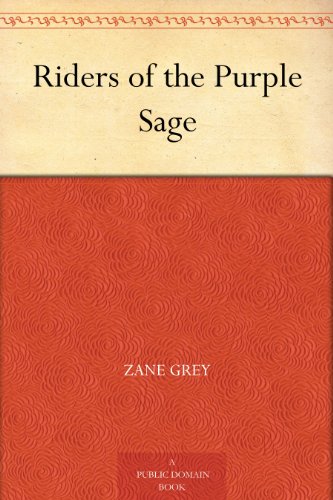
Riders of the Purple Sage
Zane Grey
Shane
Jack Schaefer
True Grit
Charles Portis
Zane Grey
Riders of the Purple Sage
Zane Grey
Western
Classic western
1912
6
6
A wealthy Mormon woman in southern Utah refuses to marry the elder her church has chosen for her, and a black-clad gunman with a grievance against that church rides into the valley as her herds, her riders, and her position are systematically stripped away.
A woman's property and independence are dismantled by her own community, and a gunman arrives with reasons of his own.
The commercial western's founding bestseller — melodrama, landscape, and a sustained attack on theocratic coercion.
Jane Withersteen, with Lassiter and Venters as co-leads.
Elder Tull and Bishop Dyer, and the church apparatus that treats Jane's property and body as community assets.
Character core
Jane wants to keep her faith, her property, and her refusal simultaneously.
To accept that the institution she loves is the thing destroying her, and that keeping her integrity requires leaving her religion's authority rather than appealing to it.
My church is good. These men are misusing it, and if I remain patient and generous the faith itself will vindicate me.
The coercion is not a misuse of the institution but its operation. There is no appeal available inside it, and the only exit is physical.
Jane's herds, her riders, her adopted child Fay, and her freedom to refuse a marriage.
Structure
Third person, alternating between Jane Withersteen's story and Venters and Bess's parallel strand in the canyon, past tense, with landscape description carrying much of the emotional register.
Two braided plots: Jane's slow dispossession in the valley and Venters's discovery of a hidden canyon with Bess. Grey cross-cuts them so that the enclosed, pastoral canyon reads as an answer to the valley's coercion, and both strands end in an escape into geography rather than a legal or social resolution.
Tull's men prepare to whip Venters for associating with Jane, and Lassiter rides in and stops it.
Jane's cattle are stampeded and her best horses stolen — the dispossession becomes total, and her strategy of patient generosity is exposed as useless.
Fay is abducted, and Jane's last leverage is gone.
Lassiter kills Dyer, recovers Fay, and the three of them flee into Surprise Valley with riders behind them.
Lassiter rolls Balancing Rock, sealing the only entrance behind them. The ending is an escape from society rather than a victory within it.
Story beats
| Beat | Where | How it lands |
|---|---|---|
A herd, crop, or claim that fails | Middle | Jane's herds are stampeded and her riders quit, and the dispossession is economic before it is physical. |
A stranger who won't say where they came from | Act I | Lassiter will not say what he is looking for, and the eventual answer reframes the whole book. |
Land bought from someone who didn't own it | Throughout | Jane's title to her land is treated by the elders as provisional on her obedience. |
A letter from back East | Middle | Word from outside the valley arrives rarely and changes nothing about the local balance of power. |
A door closed behind them | Resolution | Balancing Rock is rolled, and the door closes on the world permanently. |
Weather as antagonist for a full chapter | Throughout | The sage, the canyons, and Surprise Valley carry the book's emotional argument more than its dialogue does. |
A herd, crop, or claim that fails
Jane's herds are stampeded and her riders quit, and the dispossession is economic before it is physical.
A stranger who won't say where they came from
Lassiter will not say what he is looking for, and the eventual answer reframes the whole book.
Land bought from someone who didn't own it
Jane's title to her land is treated by the elders as provisional on her obedience.
A letter from back East
Word from outside the valley arrives rarely and changes nothing about the local balance of power.
A door closed behind them
Balancing Rock is rolled, and the door closes on the world permanently.
Weather as antagonist for a full chapter
The sage, the canyons, and Surprise Valley carry the book's emotional argument more than its dialogue does.
Tropes
Jane's inherited wealth and standing are real, and the plot is the systematic removal of both.
Lassiter has no intention of retiring; Jane spends the book trying to make him.
The land conflict is theocratic rather than commercial, which was the novel's commercial hook.
Both couples are prohibited by community and by sect, and neither prohibition is negotiable.
The canyon is a sanctuary, and the settled valley is the dangerous place.
Grey's landscape writing established the genre's visual vocabulary for the next century.
Craft notes
Grey resolves the plot with geology. The rolled stone is not a legal or moral victory — it is a physical withdrawal from a society that cannot be reformed, and it is the honest ending for the situation he has constructed. If your antagonist is an institution, consider whether your characters can actually defeat it or only escape it.
The book's anti-Mormon polemic was commercially calculated and is now the element most in need of critical framing. Writers should note both the craft achievement — the landscape writing genuinely created the genre's visual vocabulary — and the fact that its antagonist is an entire religious community, which is exactly the construction the genre spent the next century applying to Native nations.
Drop this structure into a project, set a daily word goal, and keep the streak. Free 14-day Pro trial, no credit card.