

Beach Read
Emily Henry

It Ends with Us
Colleen Hoover

Pride and Prejudice
Jane Austen

Red, White & Royal Blue
Casey McQuiston
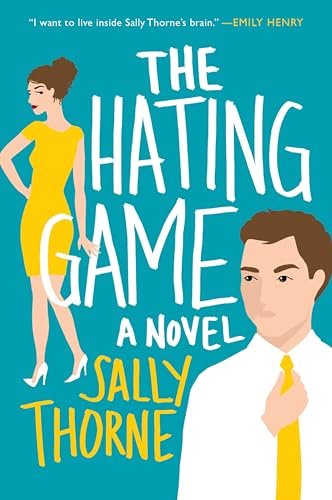
The Hating Game
Sally Thorne
Casey McQuiston
Red, White & Royal Blue
Casey McQuiston
Romance
Romantic comedy / political romance
2019
7
6
After the First Son of the United States and a British prince destroy a wedding cake in front of the international press, their governments order them to fake a friendship — and the performance becomes a secret relationship neither country can afford.
Two young men who are national assets are ordered to pretend to like each other.
A fake-relationship romcom where the publicity constraint is a matter of state.
Alex Claremont-Diaz — First Son, politically ambitious, and defended against self-knowledge by sheer momentum.
The campaign apparatus, the palace, and an opposition willing to weaponise a private life.
Character core
To get his mother re-elected, secure his own political future, and manage the Henry problem.
To stop treating his identity as a variable to be optimised for a career, and to decide what he wants independently of what is strategically survivable.
I can have this if I keep it perfectly contained. Nothing has to change about the plan.
Containment is the same as concealment, and a life built to be defensible is not a life he wants. Being outed on someone else's terms clarifies that the plan was never his.
A presidential election, the British monarchy's position, and — for Henry particularly — a family and an institution he cannot resign from.
Structure
Third person limited on Alex, past tense, interspersed with texts and emails — including a long exchange of historical love letters that carries much of the relationship's development.
The election calendar supplies the clock. Every romantic development is measured against campaign risk, which means the relationship's escalation and the political jeopardy rise on the same curve. McQuiston uses the epistolary sections to do the emotional work that two heavily surveilled public figures cannot do in scenes.
The cake incident at the royal wedding forces a staged reconciliation with a publicity schedule.
The relationship becomes real and secret, which converts every public appearance into a performance with two audiences and raises the cost of every subsequent scene.
The emails are leaked. Both are outed without consent, mid-campaign, and the institutional response is to manage rather than protect them.
Both refuse the managed version. Henry defies the palace publicly, Alex refuses to let the campaign frame him, and the election proceeds anyway.
The election result and a private future negotiated on their own terms rather than granted by their institutions.
Story beats
| Beat | Where | How it lands |
|---|---|---|
A public event where they have to pretend | Act I | The staged friendship requires public performance, and performing affection is how they find it. |
A season of separation with letters or texts | Middle | The email correspondence is the relationship's actual site, and it is also the eventual weapon. |
Meeting the family | Middle | Meeting each other's families explains both men's defences without exposition. |
Someone's parent disapproves, articulately | Middle | Institutional disapproval is articulate, procedural, and comes with a communications strategy. |
A celebration held under false pretenses | Throughout | State dinners and campaign events proceed cheerfully over a secret that would end both careers. |
The job offer in another city | Throughout | Their lives are on different continents and neither job is portable. |
Choosing them over an ambition | Climax | Both choose the relationship over an ambition each had organised their identity around. |
A public event where they have to pretend
The staged friendship requires public performance, and performing affection is how they find it.
A season of separation with letters or texts
The email correspondence is the relationship's actual site, and it is also the eventual weapon.
Meeting the family
Meeting each other's families explains both men's defences without exposition.
Someone's parent disapproves, articulately
Institutional disapproval is articulate, procedural, and comes with a communications strategy.
A celebration held under false pretenses
State dinners and campaign events proceed cheerfully over a secret that would end both careers.
The job offer in another city
Their lives are on different continents and neither job is portable.
Choosing them over an ambition
Both choose the relationship over an ambition each had organised their identity around.
Tropes
The arrangement is imposed by two governments with a publicity schedule, which gives it teeth.
The antagonism is class- and temperament-based and predates the book.
The prohibition is institutional and enforceable by people with real power over both.
The outing is non-consensual and the book treats the loss of that choice as the central injury.
The emails are the relationship's home and its vulnerability, and they quote a lineage of similar letters.
Hereditary monarchy against elected office produces genuinely different constraints on each man.
Craft notes
McQuiston solves the surveillance problem with letters. Two people who cannot be alone together and cannot speak freely in any room instead write to each other at length, quoting historical correspondence — which gives the book its most intimate material precisely where a conventional scene would be impossible. When your setting forbids privacy, find a channel that the setting does not police.
Fake-relationship plots collapse when either party could walk away. Here the arrangement is a diplomatic instruction with career consequences for refusal, which keeps the premise load-bearing for the whole first act.
Drop this structure into a project, set a daily word goal, and keep the streak. Free 14-day Pro trial, no credit card.