
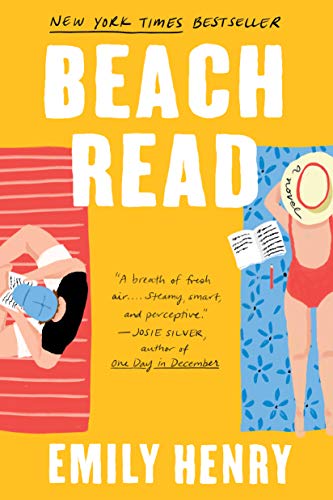
Beach Read
Emily Henry

It Ends with Us
Colleen Hoover

Pride and Prejudice
Jane Austen

Red, White & Royal Blue
Casey McQuiston
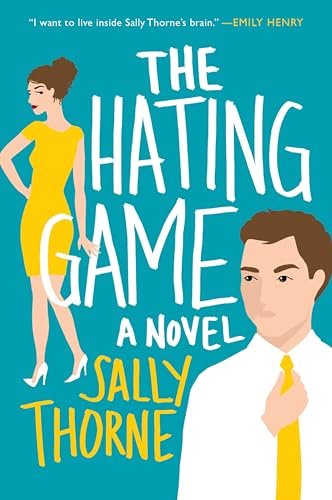
The Hating Game
Sally Thorne
Jane Austen
Pride and Prejudice
Jane Austen
Romance
Comedy of manners
1813
7
6
The second daughter of a family whose estate is entailed away from its five girls forms an early, confident judgement of a wealthy, reserved newcomer, and spends the novel discovering that her judgement was the most expensive thing she owned.
A clever woman is wrong about a man, and being wrong nearly costs her family everything.
The template. Nearly every enemies-to-lovers structure in the modern genre is a variation on this book's second act.
Elizabeth Bennet — quick, funny, and proud of exactly the faculty that fails her.
Wickham as the plot's agent; Elizabeth's own certainty as the real one; and the entail as the economic pressure underneath everything.
Character core
To marry for affection rather than security, and not to be forced into a Collins arrangement.
To distrust her own first readings, which is a harder correction than learning to like Darcy.
I read people accurately. My first impression of a person is evidence.
'Till this moment I never knew myself.' She has been vain rather than discerning, and her contempt for Darcy was flattered by Wickham's account precisely because it confirmed her.
Financial ruin for six women when Mr. Bennet dies; and, after Lydia's elopement, the destruction of every sister's marriageability at once.
Structure
Third person, close to Elizabeth almost throughout, with free indirect discourse that lets Austen's irony and Elizabeth's judgement occupy the same sentence — which is precisely how the reader is led to share her error.
A double-reversal structure. The first half builds Elizabeth's case against Darcy on evidence that is real but incomplete; Darcy's letter at the exact midpoint reorganises every fact without adding a single new event. The second half is Elizabeth re-reading her own life, and Austen dramatises rereading as an activity — she has Elizabeth literally read the letter again and again.
The Meryton assembly, where Darcy declines to dance with Elizabeth and she overhears why.
The Hunsford proposal and the letter. Darcy proposes insultingly, is refused with force, and then writes the document that dismantles Elizabeth's entire model of the past year.
Lydia elopes with Wickham. The family is ruined, and Elizabeth — who now wants Darcy — believes the scandal has made her permanently ineligible.
Lady Catherine arrives to extract a promise that Elizabeth will not accept Darcy. Elizabeth refuses to give it, which is the book's only overt declaration and reaches Darcy secondhand.
The second proposal, made in a walk rather than a drawing room, and accepted plainly.
Story beats
| Beat | Where | How it lands |
|---|---|---|
A reveal that recontextualizes an earlier scene | Midpoint | Darcy's letter converts every remembered scene into evidence of something else. |
An argument in front of witnesses | Midpoint | The Hunsford proposal becomes an argument in which both parties say true and unforgivable things. |
A confession interrupted | Late | Elizabeth's gratitude for the Lydia rescue must go unspoken because Darcy's involvement is supposed to be secret. |
Someone's parent disapproves, articulately | Act III | Lady Catherine's objection is articulate, class-based, and forces the declaration it was meant to prevent. |
The house or place one of them is attached to | Act III | Pemberley shows Elizabeth a version of Darcy that his own behaviour never managed to. |
One defends the other and never mentions it | Act III | Darcy resolves the Lydia crisis at great expense and instructs everyone to keep it from Elizabeth. |
Overhearing half a conversation | Act I | The overheard remark at the assembly is a half-conversation Elizabeth builds an entire year of judgement on. |
A reveal that recontextualizes an earlier scene
Darcy's letter converts every remembered scene into evidence of something else.
An argument in front of witnesses
The Hunsford proposal becomes an argument in which both parties say true and unforgivable things.
A confession interrupted
Elizabeth's gratitude for the Lydia rescue must go unspoken because Darcy's involvement is supposed to be secret.
Someone's parent disapproves, articulately
Lady Catherine's objection is articulate, class-based, and forces the declaration it was meant to prevent.
The house or place one of them is attached to
Pemberley shows Elizabeth a version of Darcy that his own behaviour never managed to.
One defends the other and never mentions it
Darcy resolves the Lydia crisis at great expense and instructs everyone to keep it from Elizabeth.
Overhearing half a conversation
The overheard remark at the assembly is a half-conversation Elizabeth builds an entire year of judgement on.
Tropes
The originating example, with an asymmetric and specific grievance on each side.
The entail, Darcy's ten thousand a year, and the Gardiners' trade connections are all operative plot facts.
The misunderstanding is corrected at the midpoint by a document, so the second half is about consequences rather than delay.
Elizabeth and Darcy are not competing for anything; the rivalry is entirely one of judgement.
Escalation occurs in disclosure and reassessment rather than in physical proximity.
Charlotte Lucas takes the pragmatic match Elizabeth refuses, and Austen declines to condemn her for it.
Craft notes
Austen never adds a fact after the midpoint. Every element of the reveal — Wickham's history, Bingley's departure, Darcy's interference — was on the page already, just arranged under Elizabeth's interpretation. The strongest reversals reinterpret rather than introduce. Before you write a twist, check whether you can build it entirely from what the reader already has.
Enemies-to-lovers imitations make the hostility mutual and symmetrical. Here it is asymmetric and specific: Darcy insults Elizabeth once, she is wrong about him repeatedly, and he interferes in her sister's life materially. Real grievances of different kinds are what make the reconciliation an achievement rather than a truce.
Drop this structure into a project, set a daily word goal, and keep the streak. Free 14-day Pro trial, no credit card.