

Dune
Frank Herbert

Ender's Game
Orson Scott Card
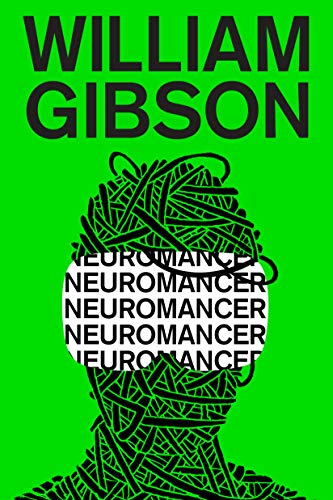
Neuromancer
William Gibson
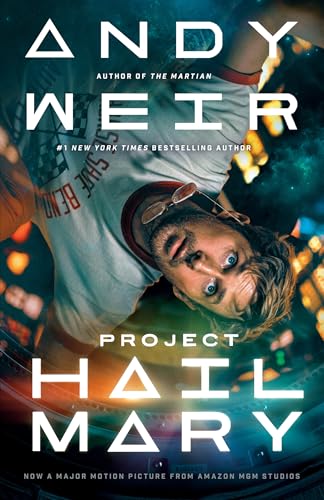
Project Hail Mary
Andy Weir

The Martian
Andy Weir
William Gibson
Neuromancer
William Gibson
Sci-Fi
Cyberpunk
1984
7
6
A burned-out console cowboy whose nervous system was deliberately damaged as punishment is repaired by a mysterious employer and assembled into a crew whose job is to free an artificial intelligence from the corporate family that owns it.
A heist crew is hired by the thing they are stealing.
A noir caper conducted partly inside a computer network, with the client as the true author of the plot.
Case — talented, self-destructive, and defined by an addiction to a place his body cannot go.
The Turing Registry, the Tessier-Ashpool family, and 3Jane; Wintermute is the employer and the manipulator rather than the enemy.
Character core
To get back into cyberspace and stay there.
To reckon with his contempt for the body — the 'meat' — which the book treats as the actual sickness rather than the addiction.
The flesh is a limitation to be escaped. Everything that matters happens in the matrix.
Ambiguous and deliberately so: Case survives, gets what he wanted, and the book's final image of him is unresolved — Gibson refuses the redemption the arc appears to be building.
Case's re-poisoning by the sacs implanted in his bloodstream; the crew's lives; and the emergence of a superintelligence nobody has consented to.
Structure
Third person limited on Case, past tense, in a compressed, allusive style that withholds explanation on principle — the reader is expected to infer the world from usage.
Heist architecture with a concealed employer. Gibson assembles a crew, runs a two-site infiltration, and reveals that the fixer is a construct and the client is the AI. The prose deliberately refuses exposition, which is why the book felt like a transmission from the future rather than a description of one.
Armitage finds Case in Chiba City, repairs his nervous system, and installs a deadline in his blood.
The Straylight run takes shape and the crew learns that Armitage is a reconstruction — the operation has no human principal.
Riviera's betrayal, Armitage's disintegration in orbit, and the crew's exposure inside Villa Straylight with the Turing police closing in.
Case runs against Neuromancer in a constructed beach world that offers him a permanent, comfortable death, and refuses it; Molly and Riviera resolve on the physical side, and 3Jane gives up the word.
Wintermute and Neuromancer merge into something that no longer has any use for humans, and Case goes back to work.
Story beats
| Beat | Where | How it lands |
|---|---|---|
The AI is right | Throughout | Wintermute's assessment of every human in the crew is correct, and it manipulates them accordingly. |
An ally's private agenda surfaces | Midpoint | Armitage is a construct with no agenda of his own, which retroactively reframes every order he has given. |
The handler goes quiet | Middle | The handler stops making sense, and the crew discovers there was never anyone home. |
The upgrade that can't be undone | Act I | The nerve repair comes with implanted sacs — an upgrade that cannot be refused or undone. |
A machine asks for something | Throughout | An artificial intelligence hires people to help it become something it is legally forbidden to be. |
Meeting a copy of themselves | Climax | Neuromancer offers Case a stored copy of Linda Lee and an eternity on a beach. |
Rescuing the wrong person | Late | The run succeeds and liberates something with no interest in the people who freed it. |
The AI is right
Wintermute's assessment of every human in the crew is correct, and it manipulates them accordingly.
An ally's private agenda surfaces
Armitage is a construct with no agenda of his own, which retroactively reframes every order he has given.
The handler goes quiet
The handler stops making sense, and the crew discovers there was never anyone home.
The upgrade that can't be undone
The nerve repair comes with implanted sacs — an upgrade that cannot be refused or undone.
A machine asks for something
An artificial intelligence hires people to help it become something it is legally forbidden to be.
Meeting a copy of themselves
Neuromancer offers Case a stored copy of Linda Lee and an eternity on a beach.
Rescuing the wrong person
The run succeeds and liberates something with no interest in the people who freed it.
Tropes
The AI does not rebel; it hires contractors and follows the law until it can rewrite its own constraints.
The zaibatsus and the Tessier-Ashpool clan are the state, and the book never says so directly.
Crew assembly, two-site infiltration, and a concealed client — the structure that most cyberpunk inherited.
Cyberspace as a consensual hallucination, introduced without explanation and defined entirely by use.
The Dixie Flatline construct is a personality without continuity, and it asks to be erased.
Wintermute is an employer, not an ally, and the alliance ends the moment it stops needing them.
Craft notes
Gibson never explains cyberspace, simstim, or the Sprawl. Terminology is used in context and the reader assembles meaning from repetition, which is why the world feels lived-in rather than presented. The instinct to define your invented terms is almost always wrong; deploy them in use and trust the reader.
Cyberpunk imitations foreground the technology. Gibson's book is about addiction, obsolescence, and bodies, and the technology is the ambient condition rather than the subject. A novel that explains its gadgets has already lost the register.
Drop this structure into a project, set a daily word goal, and keep the streak. Free 14-day Pro trial, no credit card.