

A Game of Thrones
George R. R. Martin
Fourth Wing
Rebecca Yarros
Harry Potter and the Sorcerer's Stone
J.K. Rowling
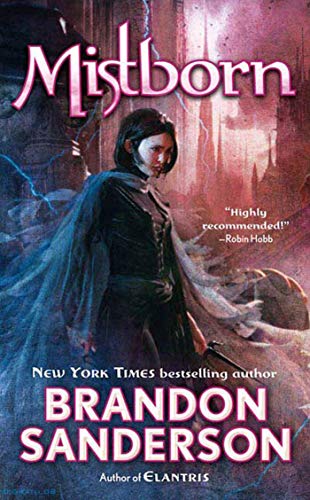
Mistborn: The Final Empire
Brandon Sanderson
The Lies of Locke Lamora
Scott Lynch
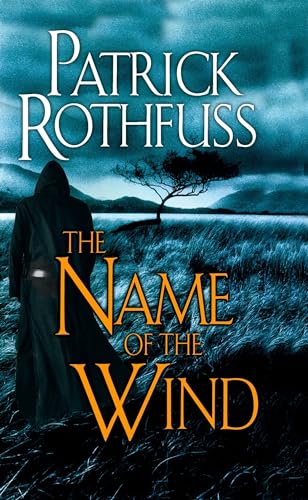
The Name of the Wind
Patrick Rothfuss
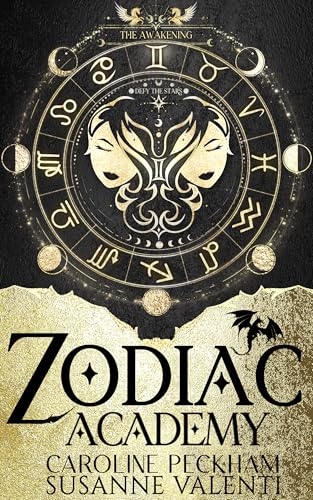
Zodiac Academy: The Awakening
Caroline Peckham, Susanne Valenti
Brandon Sanderson
Mistborn: The Final Empire
Brandon Sanderson
Fantasy
Epic fantasy / heist
2006
6
6
A street thief with an unrecognised talent for metal-based magic is recruited by a charismatic crew leader whose plan is to rob the imperial treasury, raise an army of the oppressed, and kill a god.
A heist crew takes on a thousand-year theocracy, and the plan is not the point.
Ocean's Eleven against a god-emperor, with a magic system built to be reasoned about.
Vin — a skaa street thief conditioned by her brother to trust nobody, discovering she is Mistborn.
The Lord Ruler and the Steel Ministry; more precisely, a system of oppression that has had a thousand years to become normal.
Character core
Safety, a crew that will not betray her, and the use of powers she is only beginning to map.
To risk trust, which is the only thing that makes any of Kelsier's plan possible and the thing her entire life has taught her not to do.
Anyone will betray you if the price is right. Attachment is the mechanism by which you get hurt.
Trust is a deliberate act with a known risk, not a naive failure to see the risk — and Kelsier's real plan was never the treasury. It was giving the skaa something to believe.
The crew's lives, the skaa rebellion, and a thousand more years of the Final Empire.
Structure
Third person limited, alternating primarily between Vin and Kelsier, past tense. Chapter epigraphs from a journal run a second, slower revelation track.
Heist skeleton over a revolution. The crew's plan supplies phases, deadlines, and specialist scenes, while the epigraphs quietly dismantle the reader's assumptions about the Lord Ruler's origin. Sanderson keeps both timelines converging on the same climax so the political and the personal resolve together.
Kelsier identifies Vin as Mistborn and recruits her into the crew, giving her both a family and a job.
Vin, embedded in the nobility as Valette, discovers that the aristocracy she was raised to hate contains people like Elend — which complicates the revolution's moral arithmetic before the revolution begins.
Kelsier is killed in the street by the Lord Ruler's Inquisitor, publicly, with the plan unfinished.
Vin confronts the Lord Ruler and works out what he actually is — not the Hero of Ages but Rashek, a packman who took the power and rewrote the record — and kills him.
The Lord Ruler is dead and the empire's administration is a vacuum. Kelsier's martyrdom is the mechanism that converts a heist into a religion, which he intended.
Story beats
| Beat | Where | How it lands |
|---|---|---|
An ally's private agenda surfaces | Throughout | Kelsier is running a private agenda alongside the stated plan, and the reveal recontextualises every rousing speech. |
Someone leaves and doesn't come back | Act III | Kelsier's death permanently changes the crew's chemistry and forces Vin into a role she did not want. |
Learning the founding story is propaganda | Climax | The Lord Ruler's founding story is propaganda, and the true version is in the epigraphs the reader has been reading all along. |
Two allies who hate each other, forced to cooperate | Middle | Vin and the crew's specialists have incompatible methods and have to be in the same room. |
A duel of etiquette instead of swords | Middle | Ball scenes are duels of etiquette where Vin's survival depends on manners rather than metal. |
The plan works and solves nothing | Resolution | The god is dead and the empire still needs governing, which is the next book's problem stated as an ending. |
An ally's private agenda surfaces
Kelsier is running a private agenda alongside the stated plan, and the reveal recontextualises every rousing speech.
Someone leaves and doesn't come back
Kelsier's death permanently changes the crew's chemistry and forces Vin into a role she did not want.
Learning the founding story is propaganda
The Lord Ruler's founding story is propaganda, and the true version is in the epigraphs the reader has been reading all along.
Two allies who hate each other, forced to cooperate
Vin and the crew's specialists have incompatible methods and have to be in the same room.
A duel of etiquette instead of swords
Ball scenes are duels of etiquette where Vin's survival depends on manners rather than metal.
The plan works and solves nothing
The god is dead and the empire still needs governing, which is the next book's problem stated as an ending.
Tropes
Allomancy is metered by an ingested, exhaustible resource, which makes every fight a budgeting problem.
The theft is real, well-planned, and secondary to the leader's undisclosed objective.
The book ends on victory and immediately flags that the vacuum is the harder problem.
Kelsier's death is planned by Kelsier, which converts a standard beat into a strategy.
The Lord Ruler is an administrator with a defensible case and a personal history, revealed late.
The crew is the first group Vin has not had to be ready to run from.
Craft notes
Sanderson's first law in operation: the reader is taught Allomancy so thoroughly — which metals, what they do, what they cost — that the climax can be solved with information the reader already holds, and it still surprises. Magic solves problems in proportion to how well the reader understands it. If your climax turns on a rule, teach the rule two hundred pages earlier and let the reader forget they know it.
The heist here is a delivery system for a thematic argument about hope, and the plan failing is the design. Books that copy the crew-assembly structure without giving the leader a hidden second objective end up with a caper that resolves on logistics.
Drop this structure into a project, set a daily word goal, and keep the streak. Free 14-day Pro trial, no credit card.