

Beach Read
Emily Henry

It Ends with Us
Colleen Hoover
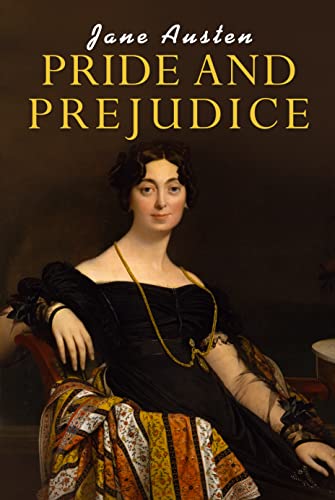
Pride and Prejudice
Jane Austen
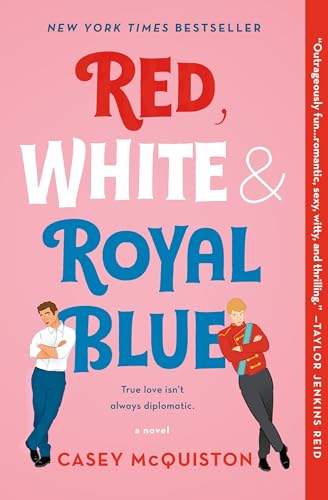
Red, White & Royal Blue
Casey McQuiston
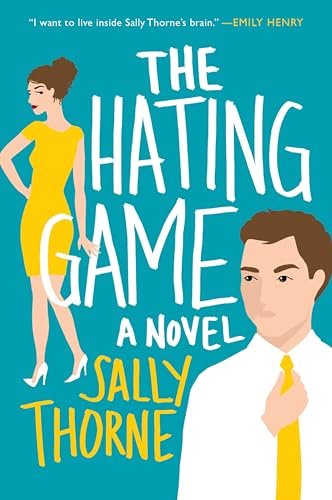
The Hating Game
Sally Thorne
Colleen Hoover
It Ends with Us
Colleen Hoover
Romance
Contemporary romance / issue fiction
2016
7
6
A woman who has just buried her abusive father and opened her own flower shop falls for a charming neurosurgeon, and finds herself recognising, from the inside, the pattern she promised herself she would never repeat.
A woman who watched her mother stay has to decide whether she will.
A romance structure used deliberately as a delivery system for a book about why leaving is difficult.
Lily Bloom — capable, funny, self-aware about her history and entirely unprotected by that awareness.
Ryle, and more precisely the cycle of remorse and repetition that Lily has watched before and can name.
Character core
To build a business and a marriage that look nothing like her parents'.
To accept that recognising a pattern does not exempt her from it, and that the decision has to be made for her daughter rather than won as an argument with herself.
This is different. He is different, he is sorry, and if I am patient and understanding I can be the reason it stops.
Her mother was not weak and Lily is not stronger. The cycle does not break because someone loves harder; it breaks because someone leaves, and that is a choice available to her that was not available to her mother.
Lily's physical safety; and, once she is pregnant, whether her daughter grows up inside the same house Lily did.
Structure
First person present tense on Lily, with journal entries addressed to Ellen DeGeneres supplying the teenage timeline and Atlas's history.
Romance beats are followed faithfully for the first half — meet-cute, banter, obstacle, consummation — so that the turn lands on a reader who has been enjoying the relationship. The journals run a second timeline that establishes both the pattern Lily grew up in and the first love who will complicate the present. Hoover's structural bet is that the reader's investment in Ryle is the point.
Lily meets Ryle on a rooftop the night of her father's funeral, having just failed to deliver a eulogy for a man she could not praise.
Atlas reappears. The past timeline collides with the present, and Ryle's response to it exposes something the romance had been reading as intensity.
The escalation reaches a point Lily cannot reinterpret, and she has to admit that she has been constructing explanations exactly as her mother did.
Lily gives birth and, holding her daughter, asks Ryle for a divorce — the confrontation is quiet, and it is the strongest scene in the book.
Lily leaves, arranges for Ryle to remain the child's father without remaining her husband, and the title is spoken as a decision rather than a hope.
Story beats
| Beat | Where | How it lands |
|---|---|---|
A lie told for good reasons that curdles | Throughout | Lily's explanations for each incident are offered in good faith and become the mechanism of her entrapment. |
Meeting the person they used to be | Midpoint | Atlas's return confronts Lily with who she was at fifteen and what she promised that girl. |
A debt paid in the wrong currency | Middle | Ryle's apologies are sincere and are the wrong currency entirely. |
Discovering a parent's letters or debts | Throughout | The journals function as her mother's story arriving in her own handwriting. |
Choosing between two people they owe | Climax | Lily chooses between the man she loves and the daughter who has not yet had a chance to be wrong about anyone. |
The truth told and not believed | Middle | Lily withholds the truth from people who would help, for the reasons that people actually withhold it. |
Sitting up with someone through bad news | Middle | Allysa sits with Lily through the worst of it and does not require her to explain. |
A lie told for good reasons that curdles
Lily's explanations for each incident are offered in good faith and become the mechanism of her entrapment.
Meeting the person they used to be
Atlas's return confronts Lily with who she was at fifteen and what she promised that girl.
A debt paid in the wrong currency
Ryle's apologies are sincere and are the wrong currency entirely.
Discovering a parent's letters or debts
The journals function as her mother's story arriving in her own handwriting.
Choosing between two people they owe
Lily chooses between the man she loves and the daughter who has not yet had a chance to be wrong about anyone.
The truth told and not believed
Lily withholds the truth from people who would help, for the reasons that people actually withhold it.
Sitting up with someone through bad news
Allysa sits with Lily through the worst of it and does not require her to explain.
Tropes
Atlas is the first love who returns, and the book resists making him a solution.
The teenage timeline supplies both the pattern and the alternative.
The book refuses the reconciliation the romance form promises, and the refusal is the point.
The pregnancy is not concealed; it is the fact that makes the decision unavoidable.
The speed is the warning sign, and the book only reveals that retrospectively.
Lily's father is buried in chapter one and unresolved throughout.
Craft notes
Hoover writes the abuser as genuinely charming, genuinely loving, and genuinely remorseful, because a reader who never liked Ryle would learn nothing. The book's argument depends on the reader having wanted the relationship to work. If you are writing about a harmful dynamic, make the reader complicit in wanting it.
Books on this subject usually mark the dangerous partner early with a tell, which lets readers feel superior to the protagonist. Hoover withholds it, which is the harder and more honest construction — and also why the book requires care in how it is recommended and discussed.
Drop this structure into a project, set a daily word goal, and keep the streak. Free 14-day Pro trial, no credit card.