
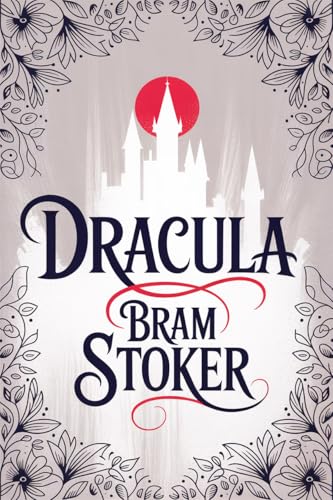
Dracula
Bram Stoker
Frankenstein
Mary Shelley
Mexican Gothic
Silvia Moreno-Garcia
The Haunting of Hill House
Shirley Jackson
The Shining
Stephen King
Bram Stoker
Dracula
Bram Stoker
Horror
Gothic horror / epistolary
1897
6
6
A solicitor's clerk sent to Transylvania to complete a property purchase discovers his client is a predatory undead nobleman intent on relocating to London, and a small group must reconstruct what he is from scattered documents before he finishes what he has started.
A monster buys English real estate, and the people who notice have to prove it to each other.
An invasion narrative assembled from diaries, letters, ships' logs, and newspaper clippings.
An ensemble. Mina Harker is the book's actual intelligence and its organising mind.
Count Dracula, who is deliberately kept off the page for most of the novel.
Character core
To understand what has happened to Lucy, protect Mina, and destroy the thing that has come to London.
To trust one another's accounts across professional and class lines — to accept the solicitor's clerk, the asylum doctor, and the woman as equally credible witnesses.
Modern London, with its railways, its medicine and its law, has left this kind of thing behind.
Rationalism is not the opposite of the supernatural but the instrument for defeating it — timetables, records, and property deeds are what actually locate and destroy the Count.
Lucy, then Mina, then an entire city, and — in the book's terms — the souls of the women concerned.
Structure
Epistolary throughout — journals, letters, phonograph recordings, telegrams, and press cuttings, compiled by Mina. No omniscient narrator exists, and the Count never gets a document.
The document frame is the book's whole engine. Information is distributed unevenly across the cast, and the plot's turning point is literally an act of archiving: Mina types and collates the papers so that, for the first time, someone can read the whole story. Stoker also uses the form for dread — a ship's log that stops mid-voyage is more frightening than any described attack.
Harker realises he is a prisoner in the castle and that his host casts no reflection.
Lucy's death and un-death. Van Helsing forces the others to accept a category of fact they have been refusing, and the group becomes a working party.
Dracula reaches Mina, contaminates her, and the group discovers he has been targeting the one person holding their information together.
The pursuit to Transylvania, run on timetables and paperwork, ending in a race against sunset at the castle gate.
The Count is destroyed, Quincey Morris dies, and Harker's closing note observes that the compiled papers contain hardly a single authentic document — the novel undercuts its own evidence in its final paragraph.
Story beats
| Beat | Where | How it lands |
|---|---|---|
Locals who won't discuss it and won't leave | Act I | The Carpathian villagers know exactly what Harker is travelling toward and will not discuss it. |
A locked door found open | Act I | Doors that should be locked are open, and doors that should be open are not. |
A body that isn't where they left it | Middle | Lucy's body does not stay where it was left, which is the book's turn from grief to horror. |
The skeptic converts | Middle | Seward, a rationalist physician, converts only after the evidence becomes personally undeniable. |
Being followed by something patient | Throughout | The Count is patient, methodical, and always slightly ahead — property purchases precede attacks by months. |
First encounter with a new technology | Middle | Phonographs, typewriters, and telegrams are new technology and are the group's decisive advantage. |
Locals who won't discuss it and won't leave
The Carpathian villagers know exactly what Harker is travelling toward and will not discuss it.
A locked door found open
Doors that should be locked are open, and doors that should be open are not.
A body that isn't where they left it
Lucy's body does not stay where it was left, which is the book's turn from grief to horror.
The skeptic converts
Seward, a rationalist physician, converts only after the evidence becomes personally undeniable.
Being followed by something patient
The Count is patient, methodical, and always slightly ahead — property purchases precede attacks by months.
First encounter with a new technology
Phonographs, typewriters, and telegrams are new technology and are the group's decisive advantage.
Tropes
The rules are established, tested, and used tactically — the book is where most of them were codified.
The compilation frame is the novel's structural centre, and it is explicitly interrogated in the final note.
Dracula appears rarely after the opening and is constructed from evidence.
The peasants' warnings are accurate, specific, and dismissed as superstition.
An old thing enters a modern city that has decided such things are finished.
The infiltration is of the household and the bloodstream rather than of an identity.
Craft notes
Stoker keeps the antagonist almost entirely offstage after the opening act and constructs him from evidence: bite marks, a ship's log, a lunatic's appetite, an estate agent's file. The Count is more frightening as an inference than as a presence. Consider how much of your monster can be delivered by its traces.
Modern epistolary horror often writes documents in novelistic prose. Stoker's differ by hand — Seward is clinical, Mina is organised, Harker deteriorates visibly, and Van Helsing's English is broken. The form only produces dread if the documents behave like documents.
Drop this structure into a project, set a daily word goal, and keep the streak. Free 14-day Pro trial, no credit card.