

Blood Meridian
Cormac McCarthy
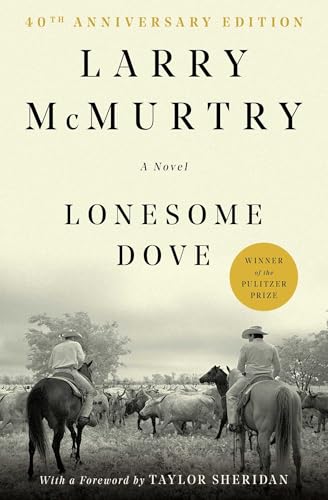
Lonesome Dove
Larry McMurtry
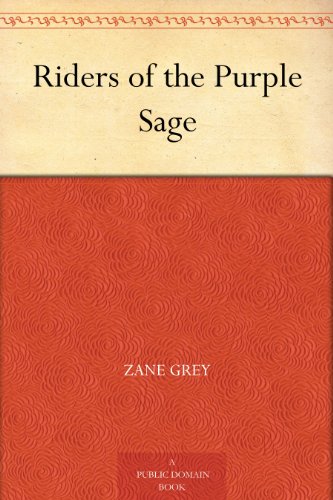
Riders of the Purple Sage
Zane Grey
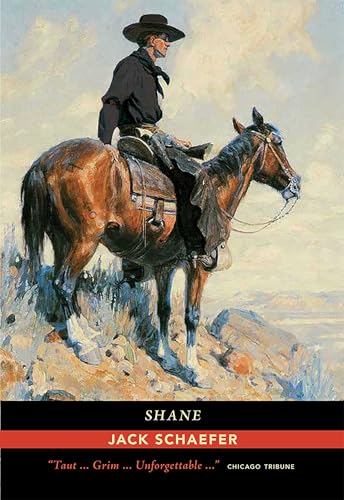
Shane
Jack Schaefer
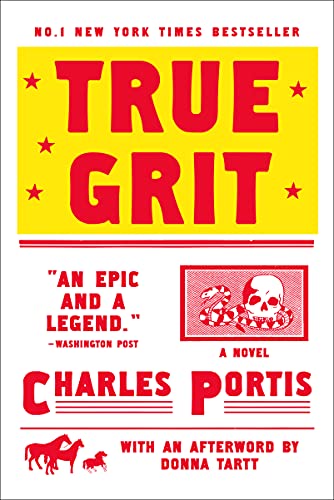
True Grit
Charles Portis
Cormac McCarthy
Blood Meridian
Cormac McCarthy
Western
Anti-western
1985
7
6
A runaway teenager drifts into the Texas-Mexico borderlands of 1849 and joins a company of scalp hunters contracted to kill Apaches, whose most articulate member is a hairless, enormous, terrifyingly learned man called the judge.
A boy rides with a scalp-hunting gang and cannot get away from the man who rides with them.
A picaresque of atrocity written in Old Testament cadence, with no redemption offered at any point.
The kid, deliberately underwritten — given almost no interiority, which is the technique.
Judge Holden, who is not opposed to the kid so much as disappointed in him.
Character core
Nothing stated. The kid drifts, joins, and rides, and the novel refuses him a stated desire.
The judge's charge is that the kid held something back — a reservation, a fragment of mercy — and would not give himself entirely to the war. The novel treats that reservation as the only thing about him worth noting.
Held by the reader rather than the character: that a western has a moral shape and that violence in it means something.
The judge's position is stated openly and never refuted: war is god, and everything else is commentary. McCarthy declines to provide a counter-argument in the text.
Not survival, which is treated as arbitrary throughout, but whether anything in the book will refuse the judge — and the ending suggests nothing does.
Structure
Third person, distant and almost geological, past tense, with chapter headings in the style of a nineteenth-century travel narrative and long paragraphs that refuse to distinguish landscape from violence.
Episodic by design, following the Glanton gang's contract and disintegration. There is no arc in the conventional sense — the kid is present rather than active, and the judge supplies the book's only continuous idea. The final chapter jumps decades and delivers the confrontation the entire novel has deferred, offstage.
The kid leaves Tennessee, and after Captain White's filibuster is destroyed he falls in with Glanton's company.
The contract corrupts completely — the gang begins taking Mexican scalps because they are indistinguishable at the point of sale — and the enterprise becomes indiscriminate slaughter for a bounty.
The Yuma ferry massacre destroys the gang. Glanton is killed, and the kid and Tobin flee across the desert with the judge hunting them.
The judge finds the kid in the desert and lets him live, having made his argument.
Decades later, in a Fort Griffin saloon, the judge meets the man the kid became and takes him into the jakes. The reader is not shown what happens. The judge dances, and says he will never die.
Story beats
| Beat | Where | How it lands |
|---|---|---|
Weather as antagonist for a full chapter | Throughout | The desert receives more descriptive attention than any human being, and it kills indifferently. |
Trading with people the town fears | Throughout | The gang trades with, and then murders, whoever the contract's economics favour. |
An enemy shows unexpected decency | Rarely | Small decencies appear — Tobin, the kid's reservation — and are noted by the judge as failures. |
Burying someone in ground too hard to dig | Throughout | Burials are perfunctory and frequently not attempted. |
A posse that turns into a mob | Middle | A commissioned company becomes indistinguishable from the raiders it was hired to stop. |
Leaving town ahead of the story catching up | Late | The kid leaves each place ahead of what he has been part of, and it does not help. |
An offer they should refuse and don't | Act I | The kid signs on with Glanton knowing exactly what the contract entails. |
Weather as antagonist for a full chapter
The desert receives more descriptive attention than any human being, and it kills indifferently.
Trading with people the town fears
The gang trades with, and then murders, whoever the contract's economics favour.
An enemy shows unexpected decency
Small decencies appear — Tobin, the kid's reservation — and are noted by the judge as failures.
Burying someone in ground too hard to dig
Burials are perfunctory and frequently not attempted.
A posse that turns into a mob
A commissioned company becomes indistinguishable from the raiders it was hired to stop.
Leaving town ahead of the story catching up
The kid leaves each place ahead of what he has been part of, and it does not help.
An offer they should refuse and don't
The kid signs on with Glanton knowing exactly what the contract entails.
Tropes
The landscape is rendered as the book's true subject and is entirely indifferent.
The gang's disintegration is squalid, unheroic, and entirely deserved.
The scalp bounty economy is depicted as documented commerce rather than as adventure.
The gang is operating under a legal contract issued by a state government, which is the horror.
The judge functions as a cosmic principle wearing a body, and the book declines to explain him.
There is no grey. There is atrocity, and one boy who occasionally does slightly less of it.
Craft notes
McCarthy withholds interiority from his protagonist entirely, which forces every judgement onto the reader. There is no character in the book to agree with, and the effect is that the prose's beauty becomes complicit — the reader is made to enjoy the sentences describing atrocity. That discomfort is the book's argument and it is achieved structurally.
The style is the most imitated and least transferable thing in American fiction. What can actually be borrowed is the discipline of refusing to editorialise: McCarthy never tells the reader that the scalping is wrong, and the absence of comment is more damning than any condemnation.
Drop this structure into a project, set a daily word goal, and keep the streak. Free 14-day Pro trial, no credit card.