

A Time to Kill
John Grisham

Gone Girl
Gillian Flynn

My Husband's Wife
Alice Feeney

The Da Vinci Code
Dan Brown
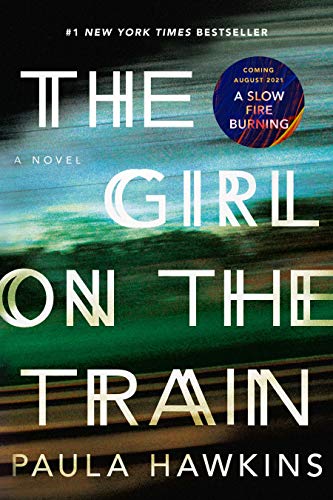
The Girl on the Train
Paula Hawkins
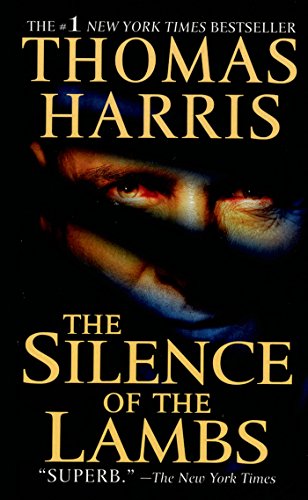
The Silence of the Lambs
Thomas Harris
John Grisham
A Time to Kill
John Grisham
Thriller
Legal thriller
1989
6
6
After two men rape his ten-year-old daughter and are likely to walk, a Black father in a Mississippi town shoots them in the courthouse, and a young white lawyer takes a defence that will bring the Klan to his street.
A father kills his daughter's rapists in front of witnesses, and his lawyer has to persuade a white jury to acquit a man everybody knows is guilty.
A courtroom novel where the legal question is settled and the moral one is not.
Jake Brigance — young, ambitious, decent, and considerably more invested in the case's profile than he admits.
DA Rufus Buckley in the courtroom; the Klan on the street; and, most durably, the jury's own unexamined assumptions.
Character core
To win, save Carl Lee from the gas chamber, and make his reputation.
To recognise that the legal argument cannot do the work, and that acquittal requires the jury to make an imaginative leap he has been unwilling to demand of them.
The law is a neutral instrument. If I construct the better argument, the verdict follows.
The jury will decide on sympathy, and sympathy in this town is racially allocated. The only route to acquittal is to make twelve white jurors briefly occupy a position they have never been asked to occupy.
Carl Lee's execution; Jake's family, house, and life; and a town that is one incident away from open racial violence.
Structure
Third person, ranging widely across the town — lawyers, jurors, Klansmen, journalists, the Hailey family — past tense. The breadth is deliberate: the community is the subject.
The crime, the confession, and the arrest are all in the first act, so the book is a whydunit and a will-they-convict rather than a mystery. Grisham runs three parallel tracks — trial preparation, community escalation toward violence, and jury selection — which converge in a courtroom that has become the town's proxy battlefield.
Carl Lee Hailey shoots Cobb and Willard on the courthouse stairs and asks Jake to defend him.
The insanity defence takes shape and immediately shows its weakness — the expert is impeachable, and the jury is unlikely to accept a plea that requires them to think Carl Lee was not in his right mind when they suspect he was entirely right.
The Klan campaign reaches Jake's home and family, his marriage strains, and the defence's expert is destroyed on cross-examination.
Jake's closing argument: he narrates the assault in full detail, asks the jury to close their eyes, and finishes by asking them to imagine the girl was white.
Acquittal. The town does not change, the Klan is not dismantled, and the book declines to suggest that a verdict fixed anything.
Story beats
| Beat | Where | How it lands |
|---|---|---|
Choosing between two people they owe | Throughout | Jake is repeatedly forced to choose between his client's interests and his family's safety. |
The solution that no one wants made public | Throughout | Everyone knows the factual answer; the question is what the community will permit itself to say out loud. |
A posse that turns into a mob | Middle | Mobilised crowds outside the courthouse repeatedly threaten to become something worse. |
The truth told and not believed | Middle | Jake's warnings about the danger to his family are dismissed until they arrive. |
The lab result that arrives after the arrest | Trial | Expert testimony arrives compromised and is dismantled at exactly the wrong moment. |
Help arrives from someone they wronged | Middle | Help comes from Lucien and from people Jake has been condescending to. |
Choosing between two people they owe
Jake is repeatedly forced to choose between his client's interests and his family's safety.
The solution that no one wants made public
Everyone knows the factual answer; the question is what the community will permit itself to say out loud.
A posse that turns into a mob
Mobilised crowds outside the courthouse repeatedly threaten to become something worse.
The truth told and not believed
Jake's warnings about the danger to his family are dismissed until they arrive.
The lab result that arrives after the arrest
Expert testimony arrives compromised and is dismantled at exactly the wrong moment.
Help arrives from someone they wronged
Help comes from Lucien and from people Jake has been condescending to.
Tropes
The genre's commercial template — jury selection, motions, and cross-examination are all given real page time.
The killer, method, and motive are established in chapter three; the book is entirely about consequence.
Jake's own family becomes a target, which collapses the professional distance the law assumes.
The court is not corrupt but the jury pool is drawn from a segregated community, which produces the same result.
Carl Lee's act is vigilante justice, and the novel refuses to resolve whether it was right.
No real figures, but the historical apparatus of the Klan and Mississippi's legal history is used as a documented antagonist.
Craft notes
Grisham withholds the closing argument's move for six hundred pages. Every legal manoeuvre before it fails or half-works, so the reader arrives at the summation genuinely out of options. If your climax is a speech, spend the book eliminating every alternative so that rhetoric is the last thing left.
Legal thrillers often invent procedure to serve drama. Grisham's courtroom is procedurally tight — the drama comes from jury selection, from what is admissible, and from what a defence lawyer is allowed to say. Constraint is the source of tension, not an obstacle to it.
Drop this structure into a project, set a daily word goal, and keep the streak. Free 14-day Pro trial, no credit card.