

A Game of Thrones
George R.R. Martin
Fourth Wing
Rebecca Yarros
Harry Potter and the Sorcerer's Stone
J.K. Rowling
Mistborn: The Final Empire
Brandon Sanderson
The Lies of Locke Lamora
Scott Lynch
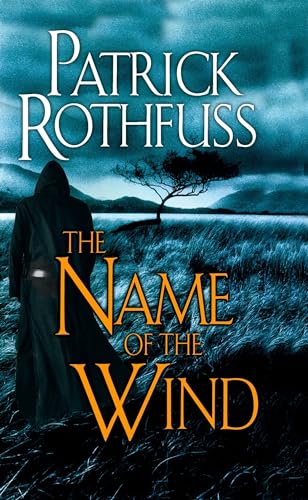
The Name of the Wind
Patrick Rothfuss
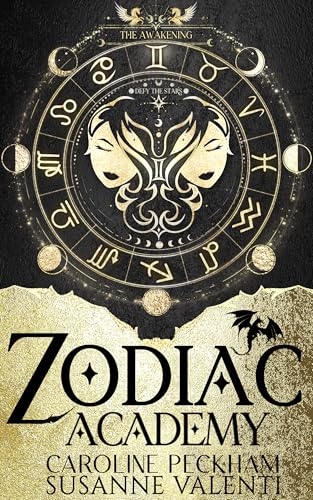
Zodiac Academy: The Awakening
Caroline Peckham, Susanne Valenti
George R.R. Martin
A Game of Thrones
George R.R. Martin
Fantasy
Epic / political fantasy
1996
7
6
When the king rides north to make his oldest friend Hand of the Realm, an honourable northern lord takes a post in a capital where honour is a liability, and his investigation into his predecessor's death brings down a dynasty.
A decent man conducts an honest investigation in a place where being right is the most dangerous thing he can be.
The Wars of the Roses with an approaching winter, told through eight rotating viewpoints who never see the whole board.
Eddard Stark functions as the apparent lead, with the ensemble taking over as his position deteriorates.
Cersei and the Lannisters in the immediate plot; structurally, a political culture in which Ned's virtues are exploitable.
Character core
To discover how Jon Arryn died, protect his children, and go home.
To recognise that his code is a set of tools that only function among people who share it, and that in King's Landing announcing your intentions is not integrity, it is disclosure.
Honour is a strategy. If I do the right thing and say so plainly, the right outcome follows.
Arrives too late and is paid for at the block. The reader receives it in his place: this world does not reward virtue, and every subsequent book is read under that rule.
Ned's life and his children's; the Iron Throne; and, in a register almost nobody in the book takes seriously, whatever is coming from beyond the Wall.
Structure
Third person limited, rotating chapter by chapter among eight viewpoint characters, past tense. Each chapter is headed with its viewpoint name, and the restriction is absolute — no character knows anything they have not personally learned.
Braided multi-POV with deliberately unequal information. Martin's central technique is that the reader assembles a picture none of the characters possess, so dramatic irony runs almost continuously. The geographic spread — Winterfell, King's Landing, the Wall, Essos — lets three genres run at once: political thriller, coming-of-age, and slow-building supernatural threat.
Robert arrives at Winterfell and asks Ned to be Hand, days after Bran finds Jaime and Cersei in the tower and is thrown from a window.
Ned learns the truth of Joffrey's parentage from a book of lineages and warns Cersei that he knows — an act of mercy that is functionally a suicide note.
Robert dies, Ned's allies fold, Littlefinger betrays him, and he is arrested and coerced into a false confession.
Joffrey has Ned executed on the steps of the Great Sept, in front of his daughter, against everyone's expectation including the reader's.
The realm fractures into war. Daenerys walks into her husband's pyre and emerges with three living dragons — magic returning to a world that had written it off.
Story beats
| Beat | Where | How it lands |
|---|---|---|
The first real loss — small, not the big one | Act I | Lady is killed early and for politics, which sets the book's terms before any major death. |
A favor called in at the worst possible time | Throughout | Old debts, fosterings, and rebellion-era favours drive nearly every alliance in the present. |
An ally's private agenda surfaces | Act III | Littlefinger's private agenda surfaces at the exact moment Ned is most exposed. |
The prophecy fulfilled by the wrong person, technically | Late | Prophetic and legendary material is present and consistently misapplied by the people quoting it. |
Someone who was right all along, ignored | The Wall | The Night's Watch is right about what is north of them and is treated as a penal colony for the credulous. |
A wedding as a political transaction | Essos | Daenerys's marriage is a political transaction in which she is the payment. |
Crowned by people who expect to control them | Throughout | Every claimant is crowned by people who intend to control them. |
The first real loss — small, not the big one
Lady is killed early and for politics, which sets the book's terms before any major death.
A favor called in at the worst possible time
Old debts, fosterings, and rebellion-era favours drive nearly every alliance in the present.
An ally's private agenda surfaces
Littlefinger's private agenda surfaces at the exact moment Ned is most exposed.
The prophecy fulfilled by the wrong person, technically
Prophetic and legendary material is present and consistently misapplied by the people quoting it.
Someone who was right all along, ignored
The Night's Watch is right about what is north of them and is treated as a penal colony for the credulous.
A wedding as a political transaction
Daenerys's marriage is a political transaction in which she is the payment.
Crowned by people who expect to control them
Every claimant is crowned by people who intend to control them.
Tropes
The genre benchmark. Information asymmetry between viewpoints is the engine.
Marriages are treaties and the book tracks their terms with unusual rigour.
Multiple characters believe they are prophesied. The narrative declines to confirm any of them.
Ned takes the Handship out of duty and is immediately worse at it than the men who wanted it.
Kept almost entirely offstage in book one, which is what makes the prologue's promise hold.
Ned confesses falsely to save his daughters and is executed anyway — the sacrifice is accepted and not honoured.
Craft notes
Martin establishes the rules with Lady. Ned executes an innocent direwolf in chapter fifteen because the political situation requires it, and the scene tells the reader everything about how this book will resolve moral conflicts. Set your book's cruelty floor early, on something small, and the reader will believe every later threat without you raising your voice.
Writers take the lesson as 'kill characters' and miss the actual mechanism: Ned's death is caused by his established character, foreshadowed for four hundred pages, and structurally necessary. A shock death that any other character could have suffered teaches the reader nothing except to disengage.
Drop this structure into a project, set a daily word goal, and keep the streak. Free 14-day Pro trial, no credit card.